Ai Escapes Ai Escapes Ai Escapes
Home › Vietnam

Vietnam

Fifteen hundred kilometres of coastline, karst bays and river deltas, strung between a French-colonial northern capital and a fast, loud southern commercial city.

Best: February, March, April 7-9 nights Hanoi · Ha Long · Hoi An
  • Entrye-Visa (single or multiple entry, up to 90 days) · up to 90 days
  • Best monthsFebruary, March, April
  • CurrencyVietnamese Dong (VND)
  • Time zoneUTC+7 (IST +1:30, no DST)
  • Main gatewaySGN
  • Typical trip7-9 nights
Plan

Where to go in Vietnam

  1. Hanoi2 nights
  2. Ha Long Bay1 night
  3. Hoi An2 nights
  4. Ho Chi Minh City2 nights
  5. Da Nang2 nights
  6. Phu Quoc3 nights
  7. Sapa2 nights
  8. Da Lat2 nights
Plan

About Vietnam

Vietnam is a long, fast, green country that rewards a proper route. Start in Hanoi, where the Old Quarter still trades street by street and the coffee is served over egg yolk, then sail overnight through the limestone islands of Ha Long or the quieter Lan Ha Bay. Ride a sampan through the flooded caves at Ninh Binh. Fly south to Hoi An, where the lanterns come on at dusk and a tailor will make you a coat in two days, with the Cham temples of My Son and the beaches of Da Nang nearby. Finish in Ho Chi Minh City with the Cu Chi tunnels and a day on the Mekong. Direct flights from six Indian cities and plenty of Indian restaurants along the way.

Vietnam is a long, narrow country running 1,650 km down the eastern edge of mainland Southeast Asia, with a river delta at each end and a spine of mountains between them. The north is the Red River delta, Hanoi and the limestone karst that rises out of the sea at Ha Long and out of the rice fields at Ninh Binh, with the Hoang Lien Son mountains and Sapa on the Chinese border. The centre holds the imperial city of Hue, the Cham ruins at My Son, the beaches of Da Nang and the merchant town of Hoi An. The south is Ho Chi Minh City, still Saigon in conversation, and the Mekong Delta behind it. The distances are real and the itinerary is built around two or three domestic flights.

For Indian travellers Vietnam has become one of the top three outbound destinations by volume, and the reasons are straightforward: nonstop flights from six Indian cities, an e-Visa that costs about INR 2,400, a cost of living low enough that a good trip lands under a lakh, and food that adapts well - there are plentiful Indian restaurants in Hanoi, Ho Chi Minh City and Da Nang, which settles the vegetarian question that stops many clients booking Southeast Asia at all. The trade-off is that it is a route rather than a stay, and it needs eight nights to do without rushing.

Quick facts
Entrye-Visa (single or multiple entry, up to 90 days) · up to 90 days
Best monthsFebruary, March, April
CurrencyVietnamese Dong (VND)
Time zoneUTC+7 (IST +1:30, no DST)
Main gatewaySGN
Typical trip7-9 nights
Good forcouples, families with young kids, families with older children, solo, seniors, small groups, honeymoon, first-timers
A short history

Vietnam spent a thousand years under Chinese rule from 111 BC, which is why the Confucian bureaucracy, the Temple of Literature in Hanoi and the character-based writing that preceded the Latin alphabet all look the way they do. Independence came in 938 AD and a series of Vietnamese dynasties followed, expanding south at the expense of the Hindu Cham kingdom, whose brick temple towers at My Son and along the central coast are the visible remains. The Nguyen dynasty, the last, established its capital at Hue in 1802 and built the Citadel and the royal tombs along the Perfume River.

France colonised the country from the 1860s, creating French Indochina and leaving the boulevards, opera houses and shophouses of Hanoi, Hue and Saigon, along with the baguette and the coffee. The Viet Minh defeated the French at Dien Bien Phu in 1954, the country was divided at the 17th parallel, and the American war followed - roughly 1965 to 1973 for US ground forces, ending with the fall of Saigon on 30 April 1975 and reunification in 1976. Around three million Vietnamese died. The doi moi economic reforms from 1986 opened the country, and the Vietnam a client sees now is young, fast-growing and thoroughly commercial. The war is close enough that the War Remnants Museum and the Cu Chi tunnels are unavoidable parts of the itinerary, and both present a firmly Vietnamese account - brief clients on that rather than letting them be surprised.

The lie of the land

Vietnam is shaped like a long S, 1,650 km from the Chinese border to the Ca Mau peninsula, and only about 50 km wide at its narrowest point near Dong Hoi. The Annamite range runs down the western side along the Lao and Cambodian borders; the Red River delta in the north and the Mekong delta in the south are flat, intensively farmed and densely populated. The limestone karst that defines the northern landscape appears at Ha Long Bay, where roughly 1,600 islands and pillars rise from the Gulf of Tonkin, and inland at Ninh Binh, often called Ha Long on land. There are 3,260 km of coastline.

Plan around flight times, not road distances. Hanoi to Da Nang is 760 km, 1 hour 20 by air and 16 hours by road - always fly it. Da Nang to Ho Chi Minh City is another 1 hour 20 by air. Within each region the drives are short: Hanoi to Ha Long 2 hours 30 on the expressway, Hanoi to Ninh Binh 1 hour 45, Hanoi to Sapa 5 to 6 hours or an overnight train to Lao Cai, Da Nang to Hoi An 45 minutes, Da Nang to Hue 2 hours 30 over the Hai Van pass, Ho Chi Minh City to Cu Chi 1 hour 30, to My Tho in the Mekong 1 hour 45 and to Can Tho 3 hours 30. Phu Quoc is an island off the Cambodian coast, 1 hour by air from Ho Chi Minh City.

Plan

When to go

February to April, the only window that works north and south at once

Because the north and south have opposite seasons, the honest answer is that February to April is the only period when the whole country is good at the same time - warm and dry in the south, mild and clearing in the north, and before the central coast's rain returns. That is the window to sell for a full north-to-south itinerary, with the caveat that Tet, the lunar new year in late January or February, closes the country for about a week and should be avoided unless the client specifically wants it. For a south-led trip, December to April is excellent: dry, 26-33C in Ho Chi Minh City, the Mekong at its easiest and Phu Quoc at its best. For a north-led trip, September to November is the better window, with Hanoi at 22-28C, clear skies over Ha Long and the Sapa rice terraces turning gold in late September - but that same period is flood season in Hoi An and Hue, so it only works if the centre is left out. May to August is hot, humid and wet everywhere, with typhoon risk on the coasts from August, and it is the cheap season for a reason.

Season by season

Three distinct climate zones, which is why a single national answer is always wrong.

North (Hanoi, Ha Long, Ninh Binh, Sapa): a genuine winter. December to February is 13-20C, grey, damp and drizzly, with Ha Long often in mist and Sapa sometimes below 5C with occasional frost - clients expecting tropical warmth in Hanoi in January are always surprised. March to April is the best northern season at 20-27C. May to August is 30-35C with very high humidity and heavy rain. September to November is clear, dry and 22-28C, and is the north at its best.

Centre (Hue, Da Nang, Hoi An): hot and dry February to August at 28-38C, with the peak beach season from April to July. September to November is the rainy season, with October and November the worst, and Hoi An's Ancient Town floods most years - sometimes to waist height, closing shops and cutting road access. Typhoons come ashore on this coast between August and November.

South (Ho Chi Minh City, Mekong, Phu Quoc): tropical and warm all year at 25-35C with almost no seasonal temperature variation. Dry season December to April, which is the best time. Rainy season May to October, but the rain comes as intense afternoon downpours of an hour or two rather than all day, so the south remains workable throughout - just wetter and greener.

Explore

Top sights

UNESCO World Heritage, Seascape

Ha Long Bay and Lan Ha Bay

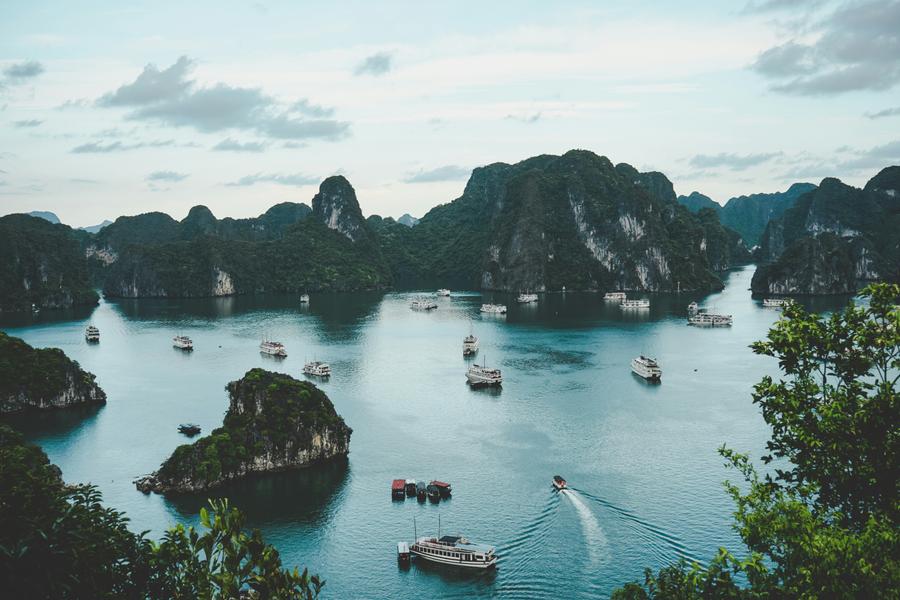
Roughly 1,600 limestone islands and pillars rising out of the Gulf of Tonkin, formed over 500 million years and best seen from the deck of an overnight boat rather than a day trip, which wastes six hours on the road for four on the water. Sell the overnight: sunset on the deck, a cave, kayaking and a quiet anchorage. Lan Ha Bay, reached from Haiphong, has the same karst with a fraction of the boats and allows kayaking more freely. December to March is often misty and grey, and cruises are cancelled outright in storms. Bay entrance fee VND 290,000.

Historic District, City

Hanoi Old Quarter and Hoan Kiem Lake

Thirty-six streets that have traded since the 13th century, each named for the craft it sold, still crammed with shophouses, street kitchens, bia hoi corners and motorbikes. Walk it at 6am when the lake fills with tai chi and the pho stalls open, and again in the evening. Nearby: the Temple of Literature, Vietnam's first university from 1070; the Ho Chi Minh Mausoleum, which closes Monday and Friday and for maintenance in autumn; and the Hoa Lo prison. Egg coffee at Giang Cafe is a genuine institution, not a tourist invention.

UNESCO World Heritage, Merchant Town

Hoi An Ancient Town

A 15th to 19th century trading port that escaped both the war and modern development, with Chinese assembly halls, Japanese covered bridge, tube houses and hundreds of tailors. The town ticket at VND 120,000 covers five heritage buildings of the client's choosing. The point of Hoi An is the evening: traffic is banned, the silk lanterns come on and the riverfront fills with boats. Two nights minimum if the client wants clothes made, because good tailoring needs two fittings. Flooding is a real risk in October and November.

War History, Memorial

The Cu Chi tunnels and the War Remnants Museum

Two hundred and fifty kilometres of hand-dug tunnels on three levels north-west of Ho Chi Minh City, where Viet Cong fighters lived through the war; the Ben Duoc site is quieter and more serious than Ben Dinh. A short widened section can be crawled, which is genuinely claustrophobic and not for everyone. Pair it with the War Remnants Museum in District 1, which is unflinching, presents a firmly Vietnamese account and includes photographs that are hard to look at. Brief clients before going. Not suitable for younger children. Allow a full day for both.

UNESCO World Heritage, Karst Landscape

Ninh Binh - Trang An and Tam Coc

Limestone karst rising out of flooded rice fields 1 hour 45 from Hanoi, with a two-hour sampan ride through a chain of low water caves, rowed by women who use their feet on the oars. Trang An is the larger and more spectacular route and was used in the Kong film; Tam Coc is smaller and prettier in the May and June harvest when the rice is gold. Add the 500 steps up to Mua Cave for the view over the valley. Doable as a day trip but better as an overnight.

UNESCO World Heritage, Temple Ruins

My Son and the Cham legacy

A cluster of red-brick Hindu temple towers in a jungle valley an hour from Hoi An, built by the Cham kingdom between the 4th and 13th centuries and dedicated largely to Shiva - which makes it immediately legible to Indian clients in a way it is not to most visitors. Heavily bombed during the war, so it is a ruin rather than a restored site. Go at 6am or 7am when it opens, before the heat and the coaches, and take a guide. Allow two and a half hours including the drive. VND 150,000.

Theme Park, Viewpoint

Ba Na Hills and the Golden Bridge, Da Nang

A French hill station on a ridge above Da Nang, reached by one of the longest cable cars in the world, now built out as a full theme park with a replica French village - and the Golden Bridge, held up by two enormous stone hands, which is the photograph everybody has seen. Be honest with clients about what it is: it is not heritage, it is a well-executed and very busy attraction, and the bridge is crowded from mid-morning. Go on the first cable car. VND 900,000-1,000,000, the priciest ticket in Vietnam.

River, Rural Life

The Mekong Delta

Nine branches of the Mekong spread across the south in a flat maze of canals, orchards, rice paddies and floating markets. From Ho Chi Minh City, My Tho and Ben Tre make a day trip of sampans through coconut palms, a coconut-candy workshop and lunch. The better version is an overnight at Can Tho, 3 hours 30 away, to reach the Cai Rang floating market at 5.30am, when it is a working wholesale market rather than a performance for boats of tourists. That early start is the whole difference.

Explore

Off the beaten path

Lan Ha Bay over Ha Long

The same limestone seascape immediately south of Ha Long, accessed from Haiphong or Cat Ba island rather than Ha Long City, with a small fraction of the cruise traffic, cleaner water, hidden beaches and kayaking permitted where much of central Ha Long now restricts it. It costs no more, it is a shorter drive from Hanoi via the expressway, and almost no Indian client knows to ask for it. Whenever the budget and the boat availability allow, this is the upgrade to make.

Phong Nha-Ke Bang

A karst national park in the narrow waist of the country holding the largest cave passage on earth at Son Doong, which requires a permit and books a year ahead, and a set of far more accessible caves around it - Paradise Cave with a wooden walkway a kilometre in, Phong Nha cave entered by boat, and the two-day Hang En trek that camps on a beach inside a cave. It is a night's train or a short flight to Dong Hoi from Hanoi and it is the most spectacular landscape in Vietnam that itineraries routinely skip.

Hue and the Nguyen royal tombs

The imperial capital from 1802 to 1945, with a walled Citadel and Forbidden Purple City on the Perfume River, and the tombs of the Nguyen emperors scattered in the hills outside - Tu Duc's overgrown lake complex, Minh Mang's formal axis and Khai Dinh's extraordinary blackened concrete and glass-mosaic hybrid. Most itineraries do it as a day trip from Hoi An over the Hai Van pass and it deserves a night. The food is the most refined in Vietnam, a legacy of the imperial kitchens.

Sapa's valleys, away from the town

Sapa town itself has been overbuilt into a hill station of concrete hotels and is genuinely disappointing. The valley below it is not: a two-day trek through Lao Chai, Ta Van and Giang Ta Chai with a Hmong or Dao guide, sleeping in a village homestay, walks past terraced rice at any season and away from the tour buses. Book through a community operator such as Sapa O'Chau. Five to six hours from Hanoi by road or the overnight train to Lao Cai, and worth two nights or none at all.

Explore

Where to stay

The Old Quarter and French Quarter, Hanoi

Thirty-six streets north of Hoan Kiem lake, each historically selling one trade and several still doing it, packed with shophouse hotels, bia hoi corners and street kitchens. It is noisy, crowded and the best atmosphere in Vietnam. The French Quarter immediately south, around the Opera House and the Metropole, is quieter with better rooms and bigger bathrooms - the right trade for clients who want to sleep.

Best for: First-time visitors, food-led clients, walkers
Stay: 2-3 nights

An Hoi and the Ancient Town edge, Hoi An

The lanes immediately around and across the bridge from the Ancient Town, close enough to walk in for the evening lanterns but outside the pedestrianised core where hotels are small and noisy. Boutique properties with pools, garden courtyards and free bicycles, and usually a free shuttle to An Bang beach 10 minutes away. This is where a Hoi An stay works best.

Best for: Couples, tailoring stays, families, honeymoons
Stay: 2-3 nights

My Khe beachfront, Da Nang

A long straight stretch of soft sand with a wall of resorts behind it, 10 minutes from Da Nang airport and 45 minutes from Hoi An. This is the beach half of a central Vietnam stay - InterContinental Danang on the Son Tra peninsula at the top end, Furama and TIA Wellness on the main strip. Good for a two or three night beach block that does not require a separate island flight.

Best for: Beach add-ons, families, resort stays, golf
Stay: 2-3 nights

District 1, Ho Chi Minh City

The commercial and colonial core around Dong Khoi, the Opera House, Notre Dame Cathedral and the Nguyen Hue walking street, with the city's best hotels, rooftop bars and restaurants and walking access to the Reunification Palace and the War Remnants Museum. Pham Ngu Lao at its western edge is the backpacker strip and is a different, much rougher product.

Best for: City stays, first-timers, business-leisure, nightlife
Stay: 2-3 nights

Lan Ha Bay, from Haiphong or Cat Ba

The southern extension of the Ha Long karst, reached from Haiphong rather than Ha Long City, with the same limestone towers and a fraction of the boats. Kayaking is permitted here where much of central Ha Long restricts it, the water is cleaner and the overnight cruises are quieter. Where budget allows, this is the better sell and clients rarely know it exists.

Best for: Couples, photographers, anyone who has seen Ha Long crowds online
Stay: 1-2 nights on board
Explore

Things to do

Adventure
  • Kayaking among the karst at Lan Ha Bay, which allows kayaking where central Ha Long largely does not, and swimming off the cruise boat.
  • Caving at Phong Nha-Ke Bang - Paradise Cave and Phong Nha cave are accessible day trips, and Hang En is a two-day expedition, while Son Doong, the largest cave passage on earth, requires a permit and books a year ahead at several thousand dollars.
  • Trekking in the Muong Hoa valley around Sapa with a Hmong or Dao guide, with homestays at Ta Van and Lao Chai; Fansipan, the highest peak in Indochina at 3,143 metres, is now reached by cable car in 15 minutes, which is either a relief or a shame.
  • Motorbike touring the Hai Van pass with an Easy Rider driver, never self-ridden.
  • Cycling the rice fields and back lanes of Hoi An, and the Ninh Binh valley.
  • Canyoning at Da Lat.
  • Diving and snorkelling at the An Thoi islands off Phu Quoc and at Cham Island off Hoi An.
  • Bamboo basket-boat rides in the Cam Thanh coconut palms, which is touristy but fun for families.
Day trips
  • From Hanoi: Ninh Binh for Trang An or Tam Coc sampans, Mua Cave's 500 steps and Bai Dinh pagoda, 1 hour 45 each way; the Perfume Pagoda by boat and cable car, 2 hours; Bat Trang ceramic village, 40 minutes; Duong Lam ancient village, 1 hour 30; and Ha Long or Lan Ha as an overnight rather than a day trip.
  • From Hoi An or Da Nang: My Son, the Cham sanctuary, 1 hour; Ba Na Hills and the Golden Bridge, 1 hour; Marble Mountains, 20 minutes; Hue over the Hai Van pass, 2 hours 30, done as a long day or better as an overnight; Cham Island by speedboat in season.
  • From Hue: the Nguyen royal tombs of Tu Duc, Minh Mang and Khai Dinh along the Perfume River.
  • From Ho Chi Minh City: the Cu Chi tunnels, 1 hour 30; My Tho and Ben Tre in the Mekong for a day on the river, 1 hour 45; Cao Dai Great Temple at Tay Ninh combined with Cu Chi; Can Gio mangroves.
  • From Can Tho: Cai Rang floating market, which has to be done at 5.30am to be worth doing.
After dark
  • Varied and genuinely good in places, which is not true everywhere in the region.
  • Ho Chi Minh City has the strongest scene - rooftop bars at the Reverie, Chill Skybar and Saigon Saigon at the Caravelle; the Bui Vien walking street, which is loud, cheap and aimed at backpackers and is fine for one look; and better cocktail bars in the alleys off Dong Khoi and the Layla and Snuffbox end of the market.
  • Hanoi is smaller but more atmospheric: Ta Hien beer corner for bia hoi at VND 10,000 a glass sitting on plastic stools in the street, the Binh Minh jazz club, and the Old Quarter's rooftops over Hoan Kiem.
  • Hoi An after dark is the best evening in the country and has nothing to do with drinking - the Ancient Town closes to traffic, silk lanterns come on and boats carry paper lanterns on the river.
  • Da Nang has a beach club scene and the Dragon Bridge breathing fire at 9pm on weekends.
  • Note that Hanoi enforces a rough 12am closing more strictly than the south.
Shopping
  • Hoi An is the shopping stop and tailoring is the reason - several hundred tailors will make a suit, dress or coat in 24 to 48 hours, and the good ones (Yaly Couture, Bebe, A Dong Silk) are worth the premium over the cheap end, which uses poor fabric and unfinished seams.
  • Allow two fittings, which means two nights in Hoi An minimum if the client wants clothes.
  • Also Hoi An for silk lanterns, leather shoes and bags made to measure.
  • In Hanoi, the Old Quarter's craft streets each sell one thing - Hang Gai for silk, Hang Bac for silver, Hang Ma for paper goods - plus Dong Xuan market for volume and the Craft Link and Indigo Store social enterprises for genuine ethnic minority textiles rather than machine copies.
  • Bat Trang village for ceramics.
  • In Ho Chi Minh City, Ben Thanh market is touristy and hard-sell but worth one visit, and the Saigon Square and Dong Khoi boutiques are better.
  • Worth buying: Vietnamese robusta and arabica coffee and a phin filter, cashews, black pepper, lacquerware, and conical hats for the children.
  • Do not buy anything sold as an antique.
Explore

Festivals & events

  • Late January or February, dates move with the lunar calendar
    Tet Nguyen Dan (Lunar New Year)

    The single most important date in the Vietnamese year and the one that most affects operations. Families travel home for a week, domestic flights and trains sell out months ahead at multiples of normal fares, a large proportion of restaurants, shops, museums and tour operators close for three to seven days, and prices spike across the board. Streets are decorated with kumquat trees and peach blossom and the atmosphere is genuinely special, but sightseeing logistics break down. Either build the trip around it deliberately with everything locked months ahead, or avoid the fortnight entirely.

  • The 14th day of each lunar month
    Hoi An Full Moon Lantern Festival

    Once a month the Ancient Town switches off its electric lights, closes to traffic entirely and is lit only by silk lanterns and candles, with paper lanterns floated on the Thu Bon river and traditional music in the streets. It happens every lunar month rather than once a year, which makes it easy to build into an itinerary - check the lunar calendar against the client's dates and shift a Hoi An night by one if it lands close. Hotel rates in Hoi An rise a little for that night.

  • The 15th day of the 8th lunar month, usually September
    Mid-Autumn Festival (Tet Trung Thu)

    A children's festival with lion dances, star lanterns and mooncakes, at its best in Hanoi's Old Quarter where Hang Ma street fills with lantern sellers for a fortnight beforehand. It is not a public holiday and nothing closes, so it is pure upside for a client who happens to be there. It falls in the north's best weather window, which makes late September a particularly good time to be in Hanoi.

  • 30 April and 1 May
    Reunification Day and Labour Day

    Marks the fall of Saigon in 1975 and reunification, followed immediately by Labour Day, which makes a four or five day national holiday. Vietnamese domestic tourism goes into overdrive: beaches at Da Nang, Nha Trang and Phu Quoc fill completely, domestic flights and hotels double in price, and Ha Long is at its busiest. There are parades and fireworks in Ho Chi Minh City. Not a week to sell a beach itinerary, and anything at all in that window needs booking months ahead.

  • Biennial, April to June in even-numbered years
    Hue Festival

    A large arts and heritage festival in the old imperial capital, with performances inside the Citadel, royal court music, a nine-day programme of processions and a re-enactment of Nguyen dynasty ceremonies. It is the one thing that makes Hue worth more than an overnight, and it coincides with the centre's dry season. Hue has limited good accommodation so book early. Confirm the current year's dates, as the format has been changing to a spread of events across the year.

Explore

Vietnam in pictures

Vietnam photo 1
On the ground

Food & drink

Pho

The national dish and a breakfast one - rice noodles in a clear beef or chicken broth simmered for hours with charred ginger, onion, star anise and cinnamon, served with herbs, lime and chilli added at the table. Northern pho is plainer and served with less garnish; southern pho comes with a plate of bean sprouts, basil and sauces. A street bowl is VND 30,000-60,000 and is better than anything a hotel will serve. Note for vegetarians that the broth is bone stock by default; a genuine vegetarian pho has to be ordered at a chay restaurant.

Banh mi

The best thing the French left behind - a light, thin-crusted baguette of rice and wheat flour filled with pate, cold cuts, pickled carrot and daikon, cucumber, coriander, chilli and a smear of mayonnaise. Banh Mi Phuong in Hoi An is the famous one and deserves the queue; every town has its own version. Vegetarian fillings of egg, tofu, mushroom and pickle are widely available and genuinely good. VND 20,000-50,000.

Bun cha and Hanoi street food

Grilled pork patties and belly in a bowl of sweet and sour fish-sauce broth, with cold rice vermicelli, herbs and a pile of fried spring rolls on the side, assembled by the eater - this is the Hanoi lunch and Bun Cha Huong Lien is the one Obama and Anthony Bourdain ate at. Around it sits the rest of northern street food: cha ca la vong, turmeric fish fried at the table with dill; banh cuon steamed rice rolls; and bun rieu crab noodle soup.

Cao lau and the Hoi An specialities

Cao lau is unique to Hoi An - thick chewy noodles made, by tradition, with water from a specific well and ash from Cham island trees, with slices of pork, crisp croutons and greens, and barely any broth. Alongside it, white rose dumplings, banh xeo crisp turmeric pancakes wrapped in herbs and rice paper, and com ga Hoi An chicken rice. Morning Glory and Mermaid are the reliable places to eat all of them in one sitting.

Vietnamese coffee

Robusta, grown in the central highlands, brewed slowly through a metal phin filter and poured over condensed milk and ice - ca phe sua da - and it is strong enough to reorganise a client's afternoon. In Hanoi, the local invention is ca phe trung, egg coffee, with a whipped yolk and condensed milk custard on top, which is closer to a dessert; Giang Cafe invented it in 1946. Coconut coffee and salt coffee are the newer variants. A phin filter and a kilo of beans are the best souvenir Vietnam offers.

Com chay and Buddhist vegetarian cooking

Vietnam has a genuine vegetarian tradition through its Buddhist temples, and com chay or quan chay restaurants exist in every city, serving mock-meat dishes made from tofu, gluten and mushroom alongside straightforward vegetable, noodle and rice plates. They are cheap, clean and used by locals rather than tourists. On the first and fifteenth day of each lunar month many ordinary restaurants run vegetarian menus too. For an Indian vegetarian client this is the single most useful thing to know about eating in Vietnam.

Vegetarian, Jain & dietary

Better than most of Southeast Asia, largely because Vietnam has a genuine Buddhist vegetarian tradition of its own. Look for "com chay" or "quan chay", vegetarian restaurants that exist in every city and are excellent and cheap, and note that the first and fifteenth day of each lunar month sees many ordinary restaurants offer full vegetarian menus. The critical phrase is "toi an chay" - I eat vegetarian - and the essential warning is that fish sauce (nuoc mam) and shrimp paste (mam tom) are default seasonings in almost everything, including most vegetable dishes and dipping sauces, so "no meat" is not enough; say "khong nuoc mam" as well. Pho broth is beef or chicken bone stock by default and a vegetarian pho has to be asked for specifically at a chay restaurant. The genuine selling point for Indian clients is that Indian restaurants are plentiful in Hanoi, Ho Chi Minh City and Da Nang - Namaste, Tandoor, Dhaba, Baba's Kitchen and Ganesh among many others - so there is always a familiar fallback, and this is worth saying early to a client hesitating over Southeast Asia. Jain requirements need an Indian restaurant in each city plus a hotel kitchen briefed ahead; onion and garlic are in most Vietnamese cooking. Halal is available in Ho Chi Minh City's Cham Muslim area around the Saigon Central Mosque and at a handful of Hanoi restaurants, but is not widespread - brief Muslim clients honestly and plan around the Indian restaurants, several of which are halal.

Where & when to eat

Vietnamese food is the lightest and most herb-driven in Southeast Asia, built on fish sauce, lime, chilli, rice noodles and enormous quantities of fresh herbs, and it varies sharply by region - northern food is subtle and less sweet, central food around Hue is spicier and more complex, southern food is sweeter with more coconut. A street bowl of pho or banh mi is VND 30,000-60,000 (INR 110-220) and is often the best thing the client eats all trip. A mid-range restaurant is VND 150,000-350,000 (INR 550-1,300) a head. The upper tier - Anan Saigon, Quince, Nen in Da Nang, the Metropole's dining rooms - runs VND 900,000-2,500,000. Benchmarks in the middle: Cha Ca Thang Long and Bun Cha Huong Lien in Hanoi, Morning Glory and Mermaid in Hoi An, Cuc Gach Quan and Nha Hang Ngon in Ho Chi Minh City. Breakfast is eaten out and early, from 6am, and pho is a breakfast dish. Lunch is 11.30 to 1.30 and dinner from 6, with street kitchens closing by 9 or 10pm and many pho stalls selling out well before that.

Food & water safety

Do not drink the tap water anywhere. Bottled water is VND 8,000-12,000 and is universal. Ice in hotels, cafes and proper restaurants is factory-made with a hole through the middle and is fine; irregular chipped ice from a street cart is not. Street food is one of the reasons to come and it is safe if the stall is busy, the turnover is fast and the food is cooked in front of you - a queue of locals is the only quality control needed. What to avoid: pre-cut fruit sitting out, raw herbs washed in tap water at a low-end stall, raw blood pudding (tiet canh), and anything lukewarm. Wash or peel fruit. Vietnamese coffee is extremely strong and clients drink three a day without noticing. In the south, heat and humidity dehydrate faster than clients expect, so carry water and oral rehydration salts. Dengue is present in both the north and the south, particularly in the rainy season, so use repellent.

Tipping

Not traditionally Vietnamese but now normal from foreign visitors in tourist areas, and wages are low enough that it matters. Restaurants: 5-10%, or round up, and check whether a 5% service charge has already been added at a hotel or upmarket restaurant. Street stalls: no tip, just round up. Grab: not expected, though the app offers it. Private driver: VND 100,000-200,000 a day. Licensed guide: VND 200,000-300,000 a day. Cruise crew on Ha Long: there is usually a shared tip box at the end, VND 200,000-400,000 per person is normal. Hotel porter VND 20,000-50,000. Spa therapist 10%. Tip in dong, not dollars - dollar notes have to be changed and small dollar bills are awkward here.

On the ground

Getting there & around

Flying in

Two main gateways and Vietnam is sold on both, which is why open-jaw is the default. Tan Son Nhat (SGN) in Ho Chi Minh City is 8 km from District 1 and is the busier airport; Noi Bai (HAN) in Hanoi is 27 km from the Old Quarter. IndiGo, Vietjet Air and Vietnam Airlines fly nonstop to both from Delhi, Mumbai, Hyderabad, Bengaluru, Ahmedabad and Kolkata, taking 4 hours 30 to 5 hours 30. Da Nang (DAD) handles some international services and is convenient for a Hoi An and Hue itinerary. Phu Quoc (PQC) is reached domestically from Ho Chi Minh City in an hour. The point to repeat at every stage: the port of entry nominated on the e-Visa application is binding, so if the routing changes the e-Visa has to be reissued, and this is the commonest self-inflicted problem we see on Vietnam files.

Airport transfers

Tan Son Nhat to District 1 is 8 km and 25 to 45 minutes depending on traffic, VND 200,000-350,000 (INR 740-1,300) by prebooked car, or VND 150,000-250,000 on Grab from the designated pickup area. Noi Bai to Hanoi's Old Quarter is 27 km and 40 to 55 minutes, VND 350,000-500,000 (INR 1,300-1,850) prebooked. Use Grab, Xanh SM or a hotel car; the meter taxis to trust are Mai Linh and Vinasun, and the risk is the unbranded lookalikes with rigged meters that wait outside both terminals. At Tan Son Nhat, build in extra time on arrival - the Digital Arrival Card has been mandatory since 15 April 2026 and groups who have not filed it in advance lose 30 to 45 minutes in the hall. Da Nang airport is 10 minutes from the beachfront and 45 minutes from Hoi An, VND 350,000-450,000.

Ride-hailing

Grab is everywhere and is the default: cars, taxis and food delivery, priced up front, paid by card or cash, and it removes the meter argument completely. A short hop in Ho Chi Minh City's District 1 or Hanoi's Old Quarter is VND 40,000-80,000 (INR 150-300). Xanh SM is the newer all-electric alternative, slightly pricier, with newer cars and drivers who tend to speak a little more English - many clients prefer it. Be is a third option. Grab Bike, the motorbike version, is cheaper and faster through traffic and we do not book it for clients. Among metered taxis, Mai Linh and Vinasun are the reputable companies; anything with a similar-looking livery and a slightly different name is the scam. Coverage is good in all the cities and at Da Nang and Hoi An, thinner in Ninh Binh and Sapa and absent in the Mekong villages.

Cars & drivers

The standard product for intercity legs and touring days. A car with an English-speaking driver runs INR 3,500-5,500 a day, a 16-seat minibus INR 6,000-9,000, inclusive of fuel and tolls. As everywhere in Southeast Asia, the driver is not a guide - a licensed English-speaking guide is a separate INR 3,500-5,000 a day and is genuinely needed at Cu Chi, the War Remnants Museum, My Son and Hue, where the sites carry history that is not self-explanatory. For a one-way transfer such as Hanoi to Ha Long or Da Nang to Hue over the Hai Van pass, book the car point to point rather than by the day. Many Hoi An and Da Nang hotels include a free shuttle between the two, which is worth asking about before quoting a car.

Scooters

Do not. Vietnam has one of the highest road accident rates in Asia, traffic in Hanoi and Ho Chi Minh City moves as a continuous river of motorbikes that takes years to read, and a foreign licence alone is not valid - a client needs a Vietnamese licence or a properly converted International Driving Permit under the 1968 convention, and without it travel insurance is void, which is the part that matters when a hospital asks for payment. The Hai Van pass and the Ha Giang loop are heavily marketed to backpackers and produce a steady flow of serious injuries. If a client is determined, put them on the back of a licensed Easy Rider tour with a professional driver instead, which is a legitimate and much safer product.

On foot

Hanoi's Old Quarter is compact and the best walking in the country, though the pavements are occupied by parked motorbikes and food stalls so most walking is done in the road - which works, because traffic flows around pedestrians who move steadily and predictably. Teach clients to walk at a constant pace and never to stop suddenly; that single instruction prevents most incidents. Hoi An's Ancient Town closes to vehicles for much of the day and is entirely walkable. Ho Chi Minh City's District 1 around Dong Khoi and Nguyen Hue is walkable but hot and humid, so most clients end up on Grab after midday. Expect 5 to 8 km on a city day. Ninh Binh involves steps - 500 up to the Mua Cave viewpoint - and Sapa involves genuine hill walking on wet clay tracks.

Finding your way

Google Maps is accurate for both driving and walking and includes Grab integration. Download offline maps for Ninh Binh, Sapa and the Mekong, where signal is patchy. Street numbering in Vietnamese cities can repeat with letter suffixes and alley addresses - an address like 25/7 means alley 25, house 7 - so have the hotel card with the address in Vietnamese, which every hotel provides. Google Translate with Vietnamese downloaded handles menus well through the camera function, which is genuinely useful for a vegetarian client. For domestic flights use the airline apps, and note that Vietjet changes schedules frequently and notifies by SMS to the number given at booking, so that number must be one the client will have in Vietnam.

Crossing borders

Vietnam borders China, Laos and Cambodia. The crossing that matters to us is Moc Bai to Bavet for Cambodia, about 6 to 7 hours by coach from Ho Chi Minh City to Phnom Penh, which is open, straightforward and genuinely usable for a Vietnam plus Cambodia combination - though most clients prefer the 1 hour flight. The Mekong river route from Chau Doc to Phnom Penh by speedboat is a pleasant alternative. Lao crossings at Lao Bao and Nam Can are open but slow and remote, and we do not build itineraries on them. The Chinese border at Lao Cai and Huu Nghi requires a Chinese visa and is not a tourist route for Indian clients. Note that a land re-entry into Vietnam needs a new e-Visa with the correct land port of entry nominated - the original air-arrival e-Visa will not cover it.

On the ground

Money

Currency & exchange

The Vietnamese Dong (VND), and the zeroes are the problem - INR 1 is about VND 270 and USD 1 is about VND 25,915, so an ordinary dinner is a six-figure number and clients routinely confuse the VND 20,000 and VND 500,000 notes, which look alike and are both blue-green polymer. Tell them to check the numbers every time. Indian rupees cannot be exchanged. Carry US dollars in clean untorn notes as a backup and change them at a gold shop or a bank in the city rather than at the airport, where rates are poor; the gold and jewellery shops in Hanoi's Hang Bac and Ho Chi Minh City's District 1 give the best rates and are entirely normal places to change money. ATMs are everywhere and dispense dong; most charge VND 50,000-60,000 a withdrawal, but TPBank and some Vietcombank machines charge less. Prices for cruises, hotels and tours are often quoted in USD but paid in dong at the day's rate.

Paying

Cards work in hotels, mid-range and better restaurants, malls and larger shops in Hanoi, Ho Chi Minh City, Da Nang and Hoi An, usually with a 3% surcharge which is often not disclosed until the bill. Everything else is cash: street food, markets, cyclos, small cafes, temple donations, the Mekong, Ninh Binh and most of Sapa. VietQR has made QR payments near-universal among Vietnamese but it needs a local bank account and is not available to visitors. Grab takes international cards in the app, which is the easiest way to avoid carrying much cash for transport. Budget VND 2,000,000-3,000,000 per person per week in cash for incidentals, and keep small notes for street food and tips. Tell clients to notify their Indian bank of travel dates.

On the ground

Culture & etiquette

Customs

Vietnamese social manners are quiet and indirect. Greet with a slight nod or a handshake; a two-handed handshake to someone older is respectful. Pass and receive things with both hands. Do not touch anyone's head, do not point with a single finger, and do not point your feet at a person or a Buddha image. Remove shoes at temples and in homes. Public displays of anger cause a serious loss of face and will get the client nothing - the person on the other side will simply stop engaging. Do not be loud in temples or on the street. Modest dress at pagodas. Two political sensitivities worth briefing. First, the war is presented from a firmly Vietnamese perspective at the War Remnants Museum and at Cu Chi, and clients should go in knowing that rather than arguing with a guide. Second, Vietnam is a one-party state and criticism of the government, the Party or Ho Chi Minh himself is genuinely unwelcome and in some circumstances illegal - photographs at the Ho Chi Minh Mausoleum are tightly controlled and the guards mean it. Also note that Vietnamese feeling about China is complicated and is not a topic for casual opinions.

What to wear

Relaxed in general - Vietnam is hot and humid and normal summer clothing is fine everywhere in the cities and on the beaches. Temples, pagodas and the Hue Citadel require covered shoulders and knees for both men and women, and the Ho Chi Minh Mausoleum enforces a strict dress code and refuses shorts, vests and hats. Carry a light scarf or sarong for temple days. Beachwear stays on the beach; topless sunbathing is not acceptable anywhere. For the north in December to February, clients need a proper jacket and layers, because Hanoi at 14C with damp cold and no indoor heating feels far colder than the number suggests and this is the most common packing mistake on Vietnam files. For Sapa in winter add a warm coat. Sensible shoes for Ninh Binh's 500 steps and Hoi An's uneven lanes, and something that dries fast for the boats.

Bargaining

Expected at markets such as Ben Thanh and Dong Xuan, with street vendors, cyclo drivers and souvenir stalls; not done in restaurants, supermarkets, fixed-price shops, hotels or at the better Hoi An tailors, where the price reflects the fabric. Open at about 40-50% of the asking price at a tourist market and settle around 60-70% - the opening quote at Ben Thanh to a foreign face can be three or four times the real price, which is wider than an Indian client expects. Keep it friendly and be prepared to walk, which usually produces the real price before the client reaches the door. Two things Indian clients get wrong. First, using Grab removes the entire cyclo and taxi negotiation and costs less than the argument is worth. Second, hard bargaining at a Hoi An tailor to get the price down produces cheap lining and unfinished seams rather than a bargain - pay for the better shop instead.

Useful phrases
Xin chaoHello
Cam onThank you
Cam on nhieuThank you very much
Vang / DaYes (northern / southern)
KhongNo
Xin loiSorry / excuse me
Lam onPlease
Bao nhieu tien?How much is it?
Dat quaToo expensive
O dau?Where is...?
Ngon quaDelicious
Toi an chayI am vegetarian / I eat vegetarian
Before you go

Entry & documents

e-Visa (single or multiple entry, up to 90 days) · up to 90 days

Passport

Passport valid at least six months beyond the date of arrival with at least two blank pages. The passport used for the e-Visa application must be the one carried, and every detail - name, number, date of birth - must match exactly, because the e-Visa is checked against the passport chip at the gate and a single mistyped character means refusal of boarding. Review the approved e-Visa PDF against the passport the day it is issued, not at the airport. Carry two printed copies of the e-Visa and keep a digital copy. Children need their own passport and their own e-Visa.

Customs

Cash above USD 5,000 or VND 15,000,000 must be declared on arrival, which is a lower threshold than most countries and catches people out. Duty-free is 200 cigarettes, 1.5 litres of spirits and personal effects up to VND 10,000,000 in value. Prohibited: weapons, drugs, pornography, and politically sensitive printed or digital material, which is enforced more seriously than travellers expect. E-cigarettes and vapes have been banned since 2025 and are confiscated. Drones require prior permission from the Ministry of National Defence and are effectively impractical for tourists - do not bring one. Antiquities and anything appearing old cannot be exported without a permit. Drug penalties include the death sentence for trafficking quantities, and this is not theoretical.

Travel insurance

Not mandatory for entry and not checked, but we insist on it and quote it in every file. Vietnamese public hospitals are basic and international-standard care means FV Hospital or Vinmec in Ho Chi Minh City or Vinmec in Hanoi, all of which require payment up front. Serious cases are evacuated to Bangkok or Singapore and that is a bill in lakhs. Make sure the policy covers road accidents, which are the most likely claim here, and that any client who intends to ride a motorbike understands the licence exclusion that will void the whole policy. Clients doing Ha Long kayaking, Sapa trekking or diving at Phu Quoc should have those declared.

Visa notes

Vietnam issues an electronic visa to Indian passport holders. The official fee is USD 25, about INR 2,400, for single entry and USD 50, about INR 4,800, for multiple entry. It is valid for stays of up to 90 days and processing takes 3 to 5 working days, so apply at least two weeks out. Apply only at evisa.gov.vn or thithucdientu.gov.vn - the government moved domains in November 2024 and the old address still circulates in travel forums and old agent files, alongside a large number of commercial clone sites charging three to five times the fee. Three traps account for almost every problem we see on Vietnam files, and all three must be briefed to the client. First, the port of entry nominated on the application is binding: the e-Visa is only valid at the airport, land crossing or seaport named on it, so if a flight is changed to a different airport the e-Visa becomes invalid at that gate and must be reissued. Check the nominated port against the ticket before ticketing and again before any schedule change is accepted. Second, the Digital Arrival Card has been mandatory and free at Tan Son Nhat in Ho Chi Minh City since 15 April 2026, filed online up to 72 hours before arrival, and it does not replace the e-Visa - it is a separate step in addition to it. Expansion to Hanoi and Da Nang is expected but is not yet in force, so do not assume it applies there. Third, Phu Quoc operates its own separate visa-exemption rules for direct international arrivals, and those rules do not carry over to a mainland itinerary. Passport validity must be six months beyond arrival with two blank pages, and every detail on the e-Visa must match the passport exactly, because a single mistyped character means refusal of boarding. Rules here move frequently - reconfirm on evisa.gov.vn before quoting.

AI ESCAPES CLIENT PRICE: INR 4,319 per adult, all-in, for the Vietnam e-Visa (single entry) - visa fee INR 2,550 + Ai Escapes service fee INR 1,499 + 18% GST on the service fee INR 270. Quote this figure to the client; the government fees above are reference only. (Rate card as of 21 Sep 2026.)

Visa rules change. Our desk confirms the current requirements for your passport before you book.

Before you go

Practical essentials

Power

220V, 50Hz. Sockets are Type A, C and F, and most modern hotel sockets are multi-fit and will take an Indian Type C two-pin plug, though the Indian Type D three-pin will not fit. Carry a universal adapter - older hotels and guesthouses in Ninh Binh, Sapa and the Mekong have two-pin sockets only. Power is generally stable in the cities; brief cuts happen in rural areas and on the islands, and Ha Long cruise boats run on generators that are often switched off overnight, so charge devices during the day. A power bank is worth carrying for long touring days.

Phone & internet

Very good and very cheap. Viettel has the best national coverage including Sapa and the Mekong, with Vinaphone and Mobifone as alternatives. A tourist SIM costs VND 150,000-300,000 for 30 days with large or unlimited data, bought at the airport or any phone shop against a passport, and eSIMs are available from Viettel and from international providers. 4G and 5G are fast in all the cities and along the coast. Coverage drops on Ha Long and Lan Ha Bay out among the islands, in the Phong Nha caves and on some Sapa trekking routes. Hotel and cafe wifi is free, fast and universal - Vietnam is one of the better-connected countries in the region. Note that some international services are occasionally throttled; a VPN is worth having but is not usually necessary for a tourist.

Opening hours

Shops 8am-8pm or later, seven days a week; markets from 5am or 6am and best early - Dong Xuan and Ben Thanh both wind down by late afternoon, and the Cai Rang floating market is effectively over by 8am. Banks 8am-4.30pm on weekdays with a long lunch break from 11.30 to 1.30, and Saturday mornings at some branches. Museums 8am-5pm, many closing for lunch from 11.30 to 1.30, and Monday is a common closing day - the War Remnants Museum is open daily but the Ho Chi Minh Mausoleum closes Monday and Friday and shuts entirely for about two months in autumn for maintenance, which needs checking. Restaurants: breakfast from 6am, lunch 11.30-1.30, dinner from 6pm with street kitchens closing 9-10pm. Hoi An's Ancient Town pedestrianises in the evening. During Tet, in late January or February, much of the country closes for a week and prices spike.

Apps worth installing
  • Grab (rides, food, payments)
  • Xanh SM (electric taxis, newer cars)
  • Google Maps with Vietnam downloaded offline
  • Google Translate with Vietnamese downloaded, for the camera menu function
  • Vietnam e-Visa portal (evisa.gov.vn) bookmarked
  • Vietnam Digital Arrival Card portal, for the mandatory Tan Son Nhat filing
  • Vietjet, Vietnam Airlines or Bamboo (domestic flights and schedule changes)
  • XE Currency (the dong has a lot of zeroes)
Before you go

Before you pack

Pack
  • Light breathable cotton and linen, plus a proper jacket and layers for Hanoi, Ha Long and Sapa between December and February
  • A light rain shell and a small umbrella, whichever season
  • Covered-shoulder tops and long trousers or skirt for pagodas and the Ho Chi Minh Mausoleum
  • Comfortable walking shoes plus something that dries fast for boats and Ninh Binh
  • Insect repellent with DEET - dengue is present north and south
  • High-factor sunscreen, sunglasses and a hat
  • Refillable water bottle and oral rehydration salts
  • Universal travel adapter
  • Power bank - cruise boats cut generators overnight
  • A soft bag or space for whatever gets tailored in Hoi An
Documents checklist
  • Passport valid six months beyond arrival with two blank pages
  • Printed e-Visa approval, checked character by character against the passport
  • The port of entry on the e-Visa confirmed against the actual flight, and rechecked after any schedule change
  • Digital Arrival Card filed for Tan Son Nhat arrivals, up to 72 hours before landing, free
  • Travel insurance covering road accidents and any trekking, kayaking or diving booked
  • Domestic flight confirmations, with a phone number the client will actually have in Vietnam
  • Cruise confirmation showing whether the Ha Long entrance fee is included
  • Photocopies of passport and e-Visa kept separately
  • Prescriptions for personal medication in original packaging
Before you go

Staying safe

Overall safety and petty crime

Vietnam is safe and violent crime against tourists is rare, but it has the most persistent bag and phone snatching in the region, particularly in Ho Chi Minh City's District 1 - thieves on motorbikes take phones out of hands at traffic lights and cut bag straps at speed. Never use a phone at the roadside, never wear a bag on the road side of the pavement, and never loop a strap across the body where it can pull the client over. Use hotel safes. Watch for taxi lookalikes with names one letter off Mai Linh or Vinasun and rigged meters - use Grab or Xanh SM. Emergency numbers are 113 police, 115 ambulance, 114 fire.

Roads and crossing the street

Road traffic is by a wide margin the most dangerous thing in Vietnam, and the country has one of the highest accident rates in Asia. Do not rent a motorbike: a foreign licence alone is not valid, travel insurance is void without a recognised one, and the hospital will want payment up front. Crossing the road in Hanoi or Ho Chi Minh City is a skill - the instruction is to walk out at a slow, steady, completely predictable pace and never stop or step back, because the motorbikes flow around anyone who is predictable and cannot avoid anyone who is not. Take the first crossing with a guide. Avoid long road transfers at night.

The three e-Visa traps

These cause more problems on Vietnam files than everything else combined. First, the port of entry nominated on the e-Visa application is binding: the visa is valid only at the airport, land border or seaport named on it, so a flight change to a different airport invalidates it at the gate. Recheck the nominated port against the ticket after any schedule change. Second, the Digital Arrival Card has been mandatory and free at Tan Son Nhat since 15 April 2026, filed online up to 72 hours before arrival, and it is separate from and additional to the e-Visa - it is the top cause of arrival-hall delays for Indian groups in 2026. Third, Phu Quoc has its own visa-exemption rules which do not carry over to a mainland itinerary. Apply only at evisa.gov.vn or thithucdientu.gov.vn.

Water, weather and health

Do not drink tap water anywhere. Street food is safe when the stall is busy and the food is cooked in front of you; the risks are pre-cut fruit, unwashed raw herbs at low-end stalls and anything lukewarm. Dengue is present in both north and south, especially in the rainy season, so use repellent morning and evening. The weather itself is the operational risk: typhoons hit the central and northern coasts from August to November, Ha Long cruises are cancelled in storms with little notice, and Hoi An's Ancient Town floods most years in October and November - build flexibility into itineraries in those months and make sure insurance covers weather disruption.

Before you go

Travel responsibly

Environment

Refill rather than buy - Vietnam has a serious plastic waste problem visible on every beach and canal, and most good hotels and an increasing number of cafes offer free filtered refills. Refuse the plastic straw and the plastic bag, which are handed out reflexively. On Ha Long and Lan Ha, choose a cruise operator with a genuine waste policy and do not throw anything overboard; the bay is visibly degraded by tourism and the better boats are actively trying. In the Mekong, use smaller local boats rather than the large motorised ones for the narrow canals. Do not buy coral, shells or anything made from turtle. At Phu Quoc and Cham Island, use reef-safe sunscreen and do not stand on coral. Take domestic flights only where the distance genuinely requires it, which in Vietnam it usually does, and use the car and the train for shorter legs.

Local communities

Do not give money or sweets to children selling postcards and lanterns in Hoi An, at Ninh Binh or in the Sapa valleys - it is what keeps them out of school, and it has created a real problem in Sapa in particular, where young Hmong girls are sent out to follow tourists rather than to class. Buy from the adult maker instead. In Sapa, book a Hmong or Dao guide through a community operator such as Sapa O'Chau rather than a hotel desk, so the money reaches the villages rather than a Hanoi agency, and pay properly for a homestay. Ask before photographing people, particularly ethnic minority women in traditional dress, who are photographed constantly and rarely asked. Do not buy "ethnic" textiles at a tourist stall assuming they are handmade - most are machine-printed imports; Craft Link and the Indigo Store in Hanoi sell the real thing. Treat Cu Chi and the War Remnants Museum as history rather than entertainment.

Wildlife

No elephant riding, including in Dak Lak province where the tourism board has been moving operators to observation-only programmes - book those instead. Avoid bear bile farms, the caged-civet operations selling "weasel coffee", snake wine villages and crocodile fishing, all of which are sold as attractions and all of which we decline. Do not eat wildlife: pangolin, civet, porcupine and various birds still appear on some rural menus and the trade is both illegal and a serious conservation problem. Do not buy ivory, rhino horn products, turtle shell or coral, and be aware that Vietnam remains a major transit market for all of them. Endangered Primate Rescue Centre at Cuc Phuong near Ninh Binh and the Son Tra Peninsula red-shanked douc langurs at Da Nang are the genuine wildlife experiences worth booking. On the bays and at Phu Quoc, do not touch or stand on coral.

Before you go

Vietnam FAQs

Do Indian citizens need a visa for Vietnam, and what does it cost?

Yes, an e-Visa, applied for online before travel at evisa.gov.vn or thithucdientu.gov.vn - the government changed domains in November 2024, so ignore the old address. It costs USD 25, about INR 2,400, for single entry or USD 50 for multiple entry, allows stays of up to 90 days and takes 3 to 5 working days. Three things to get right. The port of entry you nominate on the application is binding, so if your flight changes to a different airport the e-Visa will not work and must be reissued. The Digital Arrival Card is mandatory and free at Ho Chi Minh City's Tan Son Nhat airport, filed up to 72 hours before arrival, and is separate from the visa. And Phu Quoc has its own exemption rules that do not apply to the mainland. Through Ai Escapes, the all-in price is INR 4,319 per adult, covering the visa fee, our service fee and GST.

How many days do I need in Vietnam?

Eight nights is the sweet spot and covers the country properly: two nights in Hanoi, one on an overnight Ha Long or Lan Ha Bay cruise, one at Ninh Binh, two in Hoi An with a Da Nang and My Son day, and two in Ho Chi Minh City with the Cu Chi tunnels and a Mekong day. Five nights is the minimum and means doing one half of the country only - either the north or the south, not both. Twelve to fourteen nights lets you add Sapa, a night in Hue, an overnight in the Mekong Delta at Can Tho, and a beach finish at Phu Quoc.

When is the best time to visit Vietnam?

February to April is the only window that works across the whole country at once, because the north and south have opposite seasons. The south is dry and warm from December to April. The north is cold, grey and drizzly from December to February and at its best from September to November. Central Vietnam - Hoi An, Da Nang, Hue - has its rainy season from September to November and Hoi An floods most years in October and November. Avoid Tet, the lunar new year in late January or February, when much of the country closes for a week.

Are there direct flights from India to Vietnam?

Yes, and plenty of them. IndiGo, Vietjet Air and Vietnam Airlines fly nonstop from Delhi, Mumbai, Hyderabad, Bengaluru, Ahmedabad and Kolkata to both Ho Chi Minh City and Hanoi, taking about 4 hours 30 from Kolkata and 5 hours 30 from Mumbai. Because Vietnam is sold on both gateways, the best build is usually open-jaw - in to Hanoi and out of Ho Chi Minh City, or the reverse - which avoids backtracking and normally costs the same. Just make sure the airport you nominate on your e-Visa matches your actual arrival airport.

How much does a Vietnam trip cost from India?

It is good value. An eight-night mid-range trip costs roughly INR 55,000 to 95,000 per person on twin sharing for land arrangements, excluding international flights, and that includes an overnight Ha Long cruise, the internal flights and a private car with guide for the touring days. Return airfare nonstop from India is about INR 18,000 to 38,000, more over Christmas and Tet. Street food costs INR 120 to 180 a bowl and a mid-range restaurant meal INR 550 to 1,300. The one expensive ticket is the Ba Na Hills cable car to the Golden Bridge at about INR 3,500.

Is vegetarian food easy to find in Vietnam?

Yes, more easily than in most of Southeast Asia. Vietnam has its own Buddhist vegetarian tradition, so com chay and quan chay vegetarian restaurants exist in every city and are cheap and good, and many ordinary restaurants run vegetarian menus on the first and fifteenth of each lunar month. The phrase is toi an chay. The important warning is that fish sauce is a default seasoning in almost everything including vegetable dishes, so also say khong nuoc mam. Best of all, there are plenty of Indian restaurants in Hanoi, Ho Chi Minh City and Da Nang, so there is always a familiar fallback. Jain requirements need a hotel kitchen briefed in advance.

Is Vietnam safe for Indian travellers and families?

Yes. Violent crime against visitors is rare and Vietnamese people are friendly and used to Indian travellers, who now make up one of the largest visitor groups. The two real risks are practical. Bag and phone snatching from passing motorbikes is common in Ho Chi Minh City, so keep phones away from the roadside and bags on the inside shoulder. And road traffic is genuinely dangerous, so do not rent a motorbike and learn to cross the road by walking at a slow, steady pace rather than stopping. Families travel here easily, although the Cu Chi tunnels and the War Remnants Museum are not suitable for young children.

What is the Digital Arrival Card, and do I still need an e-Visa?

Yes, you still need the e-Visa - the Digital Arrival Card does not replace it. It is a separate, free online form that has been mandatory at Ho Chi Minh City's Tan Son Nhat airport since 15 April 2026, filed up to 72 hours before you land, and it is currently the single biggest cause of arrival-hall delays for Indian groups. Fill it in before you leave India and carry the confirmation. Expansion to Hanoi and Da Nang is expected but is not yet in force, so check your arrival airport's current requirement close to departure. Anyone asking you to pay for the arrival card is running a scam - it is free.

Rather talk it through?

Message our travel desk and describe the trip — a real person picks it up, usually within the hour on Indian working days.

Talk to a travel expertSend your dates, we plan the rest