Ai Escapes Ai Escapes Ai Escapes
Home › Maldives

Maldives

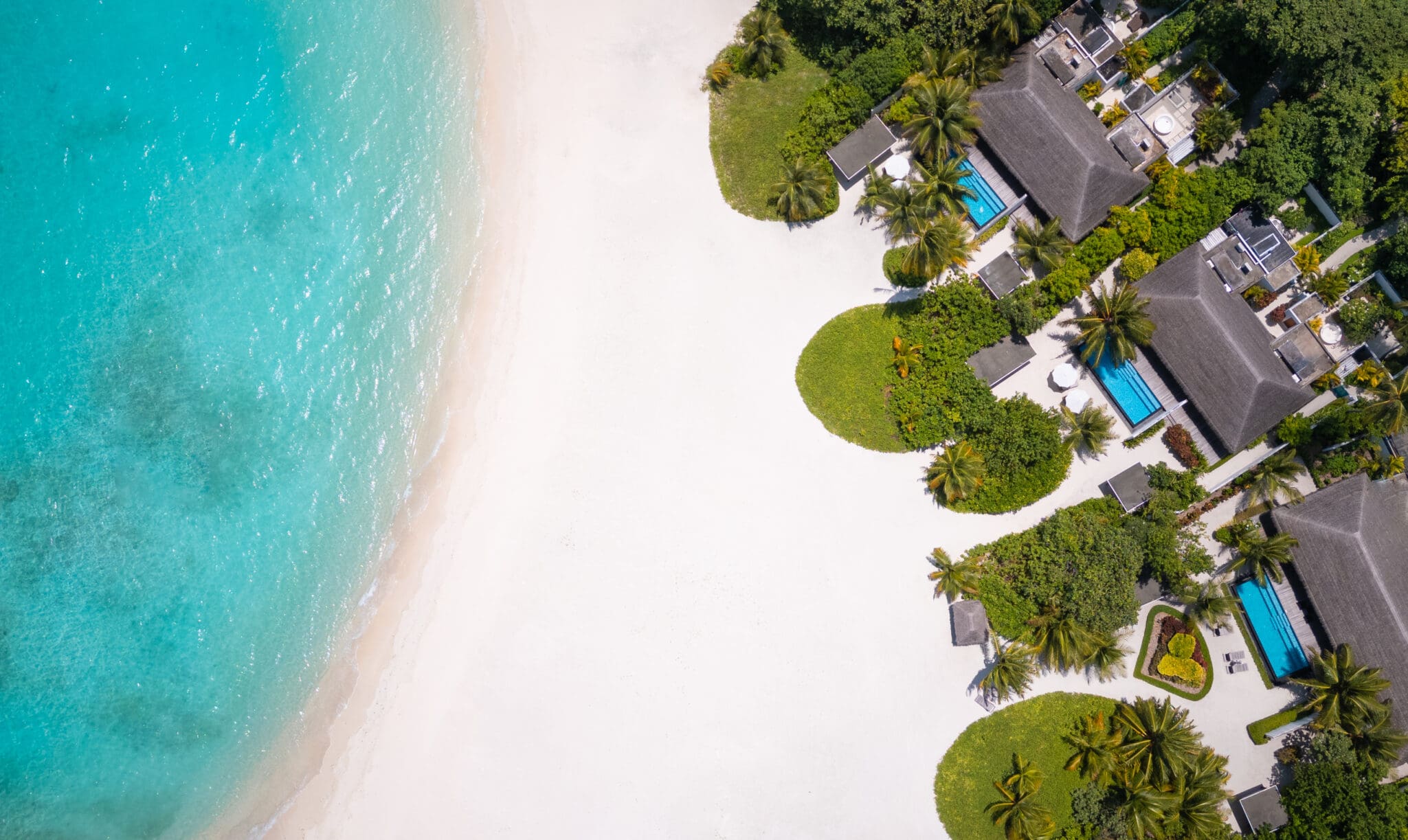
Twenty-six atolls of one-island-one-resort in the middle of the Indian Ocean, where the property you pick and the transfer you pick are the entire holiday.

Best: December, January, February, March, April 5-6 nights Overwater villas · house reefs
  • EntryFree visa on arrival, 30 days (Indian nationals recorded as entitled to 90) · up to 30 days
  • Best monthsDecember, January, February, March, April
  • CurrencyMaldivian Rufiyaa (MVR); USD used daily
  • Time zoneUTC+5, no DST (IST -0:30)
  • Main gatewayMLE
  • Typical trip5-6 nights

89 Maldives resorts we know inside out

Every island with its villas, meal plans, dining and transfer. Filter by what matters to you, then open a resort for the full picture.

Adaaran Select Hudhuran Fushi
North Malé Atoll

Adaaran Select Hudhuran Fushi

★★★★
Speedboat9 villa typesAI Premium
Adaaran Select Hudhuranfushi & Adaaran Prestige Vadoo
North Malé Atoll (Kaafu Atoll) and South Malé Atoll

Adaaran Select Hudhuranfushi & Adaaran Prestige Vadoo

★★★★★
15 min Speedboat12 villa typesAI · AI Premium · AI Premium
Alila Kothaifaru Maldives
Raa Atoll

Alila Kothaifaru Maldives

★★★★★
45 min Seaplane7 villa typesBB
Anantara Dhigu Resort & Spa
South Malé Atoll

Anantara Dhigu Resort & Spa

★★★★★
30 min Speedboat9 villa typesHB · FB · AI
Anantara Veli Maldives Resort
South Malé Atoll

Anantara Veli Maldives Resort

★★★★★
30 min Speedboat7 villa typesHB · FB · AI
Atmosphere Kanifushi
Lhaviyani Atoll

Atmosphere Kanifushi

★★★★★
35 min Seaplane9 villa typesAI
Brennia Kottefaru Maldives
Raa Atoll

Brennia Kottefaru Maldives

★★★★★
40 min Seaplane14 villa typesAI
Centara Grand Lagoon Maldives
North Malé Atoll

Centara Grand Lagoon Maldives

★★★★★
Speedboat9 villa typesHB · FB
Centara Mirage Lagoon Maldives
North Malé Atoll (Kaafu Atoll)

Centara Mirage Lagoon Maldives

★★★★★
14 villa typesHB+ · FB+ · AI · AI Premium
Centara Ras Fushi & Spa Maldives
North Malé Atoll

Centara Ras Fushi & Spa Maldives

★★★★
6 villa typesAI · AI Premium
Coco Bodu Hithi Maldives
North Malé Atoll

Coco Bodu Hithi Maldives

★★★★★
35 min Speedboat6 villa typesBB · HB · FB · AI
Cocoon Maldives
Lhaviyani Atoll

Cocoon Maldives

★★★★★
30 min Seaplane8 villa typesAI
Como Cocoa Island
South Malé Atoll

Como Cocoa Island

★★★★★
40 min Speedboat6 villa typesBB · HB · FB
Como Maalifushi Maldives
Thaa Atoll

Como Maalifushi Maldives

★★★★★
45 min Seaplane11 villa typesBB · HB · FB
Conrad Maldives
South Ari Atoll

Conrad Maldives

★★★★★
Seaplane14 villa typesBB · HB · FB
Dhigufaru Island Resort
Baa Atoll (UNESCO Biosphere Reserve)

Dhigufaru Island Resort

★★★★★
30 min Domestic flight + speedboat7 villa typesAI
dusitD2 Feydhoo
North Male Atoll

dusitD2 Feydhoo

★★★★★
7 min Speedboat7 villa typesAI · AI Premium
Furaveri Maldives
Raa Atoll

Furaveri Maldives

★★★★★
45 min Seaplane11 villa typesBB · HB · FB · AI Premium
Hard Rock Maldives
South Male Atoll (Emboodhoo Lagoon)

Hard Rock Maldives

★★★★★
20 min Speedboat11 villa typesHB · FB · FB+ · AI · AI Premium
Heritance Aarah
Raa Atoll

Heritance Aarah

★★★★★
40 min Seaplane7 villa typesAI Premium
Huvafen Fushi Maldives
North Malé Atoll

Huvafen Fushi Maldives

★★★★★
30 min Speedboat6 villa typesBB · HB · FB · AI
Ja Manafaru Maldives
Haa Alifu Atoll, Upper North Province

Ja Manafaru Maldives

★★★★★
70 min Seaplane7 villa typesBB · HB · FB · AI
Jawakara Islands Maldives
Lhaviyani Atoll

Jawakara Islands Maldives

★★★★★
35 min Seaplane8 villa typesBB · HB · FB · AI Premium
Joy Island Maldives
North Malé Atoll

Joy Island Maldives

★★★★★
40 min Speedboat9 villa typesAI · AI Premium
Kuda Villingili Resort Maldives
North Male Atoll

Kuda Villingili Resort Maldives

★★★★★
30 min Speedboat10 villa typesHB · FB · AI
Kuredu Island Resort & Spa
Lhaviyani Atoll

Kuredu Island Resort & Spa

★★★★
35 min Domestic flight + speedboat16 villa typesAI
Le Meridien Maldives Resort & Spa
Lhaviyani Atoll

Le Meridien Maldives Resort & Spa

★★★★★
35 min Seaplane10 villa typesHB · FB
Lily Beach Resort & Spa
South-East Ari Atoll

Lily Beach Resort & Spa

★★★★★
25 min Seaplane9 villa typesAI Premium
Lux South Ari Atoll Resort & Villas
South Ari Atoll

Lux South Ari Atoll Resort & Villas

★★★★★
25 min Seaplane11 villa typesAI · AI Premium
Meeru Island Resort & Spa
North Malé Atoll

Meeru Island Resort & Spa

★★★★
55 min Speedboat9 villa typesAI Premium
Noku Maldives
Noonu Atoll

Noku Maldives

★★★★★
45 min Seaplane7 villa typesAI
Ozen Reserve Bolifushi
South Malé Atoll

Ozen Reserve Bolifushi

★★★★★
Speedboat8 villa typesAI Premium
RAAYA by Atmosphere
Raa Atoll

RAAYA by Atmosphere

★★★★★
45 min Seaplane8 villa typesAI
Sheraton Maldives Full Moon Resort & Spa
North Male Atoll

Sheraton Maldives Full Moon Resort & Spa

★★★★★
15 min Speedboat10 villa typesBB · HB · FB · AI · AI Premium
Six Senses Laamu
Laamu Atoll

Six Senses Laamu

★★★★★
Seaplane14 villa typesBB · HB · FB
Siyam World Maldives
Noonu Atoll

Siyam World Maldives

★★★★★
30 min Domestic flight + speedboat16 villa typesAI Premium
Sun Siyam Iru Veli
South Nilandhe Atoll (Dhaalu Atoll)

Sun Siyam Iru Veli

★★★★★
40 min Seaplane9 villa typesAI
The Ritz-Carlton Maldives, Fari Islands
North Malé Atoll

The Ritz-Carlton Maldives, Fari Islands

★★★★★
10 min Seaplane8 villa typesBB · HB
The St Regis Maldives Vommuli Resort
Dhaalu Atoll

The St Regis Maldives Vommuli Resort

★★★★★
45 min Seaplane10 villa typesHB · FB
The Standard Huruvalhi (Hyatt Group)
Raa Atoll

The Standard Huruvalhi (Hyatt Group)

★★★★★
40 min Seaplane7 villa typesAI Premium
VARU by Atmosphere
North Malé Atoll

VARU by Atmosphere

★★★★★
40 min Speedboat8 villa typesAI
Veligandu Island Resort & Spa Maldives

Veligandu Island Resort & Spa Maldives

★★★★
20 min Seaplane9 villa typesAI Premium
Villa Nautica
North Male Atoll

Villa Nautica

★★★★★
20 min Speedboat10 villa typesAI · AI Premium
Villa Park

Villa Park

★★★★★
Domestic flight + speedboat15 villa typesAI · AI Premium
You & Me By Cocoon Maldives
Raa Atoll

You & Me By Cocoon Maldives

★★★★★
45 min Seaplane7 villa typesAI Premium
Adaaran Select Meedhupparu
Raa Atoll

Adaaran Select Meedhupparu

★★★★★
Seaplane9 villa typesAI Premium
Ozen Life Maadhoo
South Male Atoll

Ozen Life Maadhoo

★★★★★
45 min Speedboat6 villa typesAI Premium
Cinnamon Velifushi Maldives
Vaavu Atoll

Cinnamon Velifushi Maldives

★★★★★
25 min Seaplane5 villa typesAI · AI Premium
Fushifaru Maldives
Faadhippolhu Atoll (Lhaviyani Atoll)

Fushifaru Maldives

★★★★★
35 min Seaplane9 villa typesAI
Hurawalhi Island Resort
Lhaviyani Atoll

Hurawalhi Island Resort

★★★★★
35 min Domestic flight + speedboat5 villa typesAI Premium
Joali Maldives
Raa Atoll

Joali Maldives

★★★★★
40 min Seaplane11 villa typesBB · HB
JW Marriott Maldives Kaafu Atoll Island Resort
Kaafu Atoll

JW Marriott Maldives Kaafu Atoll Island Resort

★★★★★
15 min Speedboat7 villa typesBB · HB · FB · AI
NH Maldives Kuda Rah Resort
Alifu Dhaalu Atoll

NH Maldives Kuda Rah Resort

★★★★★
25 min Seaplane5 villa typesBB · HB · FB · FB+ · AI
NOOE Maldives Kunaavashi
Vaavu Atoll

NOOE Maldives Kunaavashi

★★★★★
25 min Seaplane5 villa typesBB · HB · FB · AI
Six Senses Kanuhura
Lhaviyani Atoll

Six Senses Kanuhura

★★★★★
40 min Seaplane14 villa typesBB · HB · FB
The Residence Maldives at Dhigurah
Gaafu Alifu Atoll

The Residence Maldives at Dhigurah

★★★★★
55 min Domestic flight + speedboat7 villa typesAI
W Maldives

W Maldives

★★★★★
25 min Seaplane6 villa typesHB · HB+ · FB · FB+
Oblu Nature Helengeli
North Male Atoll

Oblu Nature Helengeli

★★★★
50 min Speedboat9 villa typesAI
Radisson Blu Resort Maldives
South Ari Atoll (Alifu Dhaalu Atoll)

Radisson Blu Resort Maldives

★★★★★
30 min Seaplane11 villa typesAI
Saii Lagoon Maldives
South Male Atoll

Saii Lagoon Maldives

★★★★
20 min Speedboat11 villa typesHB · FB · FB+ · AI · AI Premium
The Residence Maldives Falhumaafushi
Gaafu Alifu Atoll

The Residence Maldives Falhumaafushi

★★★★★
Speedboat7 villa typesHB · AI
Bandos Maldives
North Malé Atoll

Bandos Maldives

★★★★
10 min Speedboat8 villa typesBB
DHIGALI Maldives
North Maalhosmadulu (Raa) Atoll

DHIGALI Maldives

★★★★★
Seaplane12 villa typesAI Premium
Machchafushi Island Resort & Spa Maldives
South Ari Atoll

Machchafushi Island Resort & Spa Maldives

★★★★★
25 min Seaplane7 villa typesHB+ · FB+ · AI Premium
Oaga Art Resort Maldives
North Male' Atoll

Oaga Art Resort Maldives

★★★★★
45 min Speedboat4 villa typesAI · AI Premium
Oblu Xperience Ailafushi
North Male Atoll

Oblu Xperience Ailafushi

★★★★
15 min Speedboat4 villa typesAI
Rah Gili Maldives
South Male (Kaafu Atoll)

Rah Gili Maldives

★★★★★
40 min Speedboat6 villa typesBB · HB · FB · AI
Adaaran Club Rannalhi & Adaaran Prestige Vadoo
South Male Atoll

Adaaran Club Rannalhi & Adaaran Prestige Vadoo

★★★★★
15 min Speedboat3 villa typesAI · AI · AI Premium
Emerald Faarufushi Resort & Spa
Raa Atoll

Emerald Faarufushi Resort & Spa

★★★★★
45 min Seaplane6 villa typesAI Premium
Emerald Maldives Resort & Spa
Raa Atoll

Emerald Maldives Resort & Spa

★★★★★
40 min Seaplane12 villa typesAI Premium
Four Seasons Landaa Giravaru
Baa Atoll (UNESCO Biosphere Reserve)

Four Seasons Landaa Giravaru

★★★★★
35 min Seaplane10 villa typesBB
Hideaway Beach Resort & Spa
Haa Alifu Atoll

Hideaway Beach Resort & Spa

★★★★★
75 min Seaplane12 villa typesFB · AI
Hilton Maldives Amingiri Resort & Spa
North Malé Atoll

Hilton Maldives Amingiri Resort & Spa

★★★★★
20 min Speedboat7 villa typesBB · HB · FB
Kagi maldives Resort & Spa
North Male Atoll

Kagi maldives Resort & Spa

★★★★★
15 min Seaplane3 villa typesAI Premium
KURUMBA Maldives
North Malé Atoll

KURUMBA Maldives

★★★★★
10 min Speedboat8 villa typesHB · FB · AI · AI Premium
Medhufushi Island Resort
Meemu Atoll

Medhufushi Island Resort

★★★★
45 min Seaplane4 villa typesBB · HB · FB · AI
Meyyafushi Maldives
Lhaviyani Atoll

Meyyafushi Maldives

★★★★★
Seaplane9 villa typesAI Premium
Sirru Fen Fushi Private Lagoon Resort
Shaviyani Atoll

Sirru Fen Fushi Private Lagoon Resort

★★★★★
Seaplane8 villa typesBB · HB · FB · AI
Velassaru Maldives
South Male Atoll

Velassaru Maldives

★★★★★
25 min Speedboat8 villa typesHB+
Adaaran Prestige Vadoo
South Malé Atoll

Adaaran Prestige Vadoo

★★★★★
15 min Speedboat3 villa typesAI · AI Premium
Grand Park Kodhipparu, Maldives
North Male Atoll

Grand Park Kodhipparu, Maldives

★★★★★
20 min Speedboat6 villa typesHB · FB · AI
Kaani Palm Beach

Kaani Palm Beach

★★★★
25 min Speedboat6 villa typesBB · HB · FB
Kuramathi Maldives

Kuramathi Maldives

90 min Speedboat11 villa typesAI
Sun Siyam Iru Fushi

Sun Siyam Iru Fushi

45 min Seaplane11 villa typesHB · FB · AI Premium
Sun Siyam Olhuveli

Sun Siyam Olhuveli

45 min Speedboat14 villa typesHB · FB · AI
Adaaran Club Rannalhi
South Male Atoll

Adaaran Club Rannalhi

★★★★
45 min Speedboat2 villa typesAI
Kuredhivaru Resort & Spa
Noonu Atoll

Kuredhivaru Resort & Spa

★★★★★
45 min Seaplane3 villa typesBB · HB · FB · AI · AI Premium
Four Seasons Resort Maldives at Kuda Huraa
North Malé Atoll

Four Seasons Resort Maldives at Kuda Huraa

★★★★★
25 min Speedboat2 villa typesBB
Sun Siyam Romance at Olhuveli

Sun Siyam Romance at Olhuveli

★★★★
45 min Speedboat2 villa typesFB · AI
89 resorts
Plan

Where to go in Maldives

  1. North and South Male Atoll4 nights
  2. Ari Atoll4 nights
  3. Baa Atoll4 nights
  4. Male and Hulhumale1 night
  5. Maafushi3 nights
Plan

About Maldives

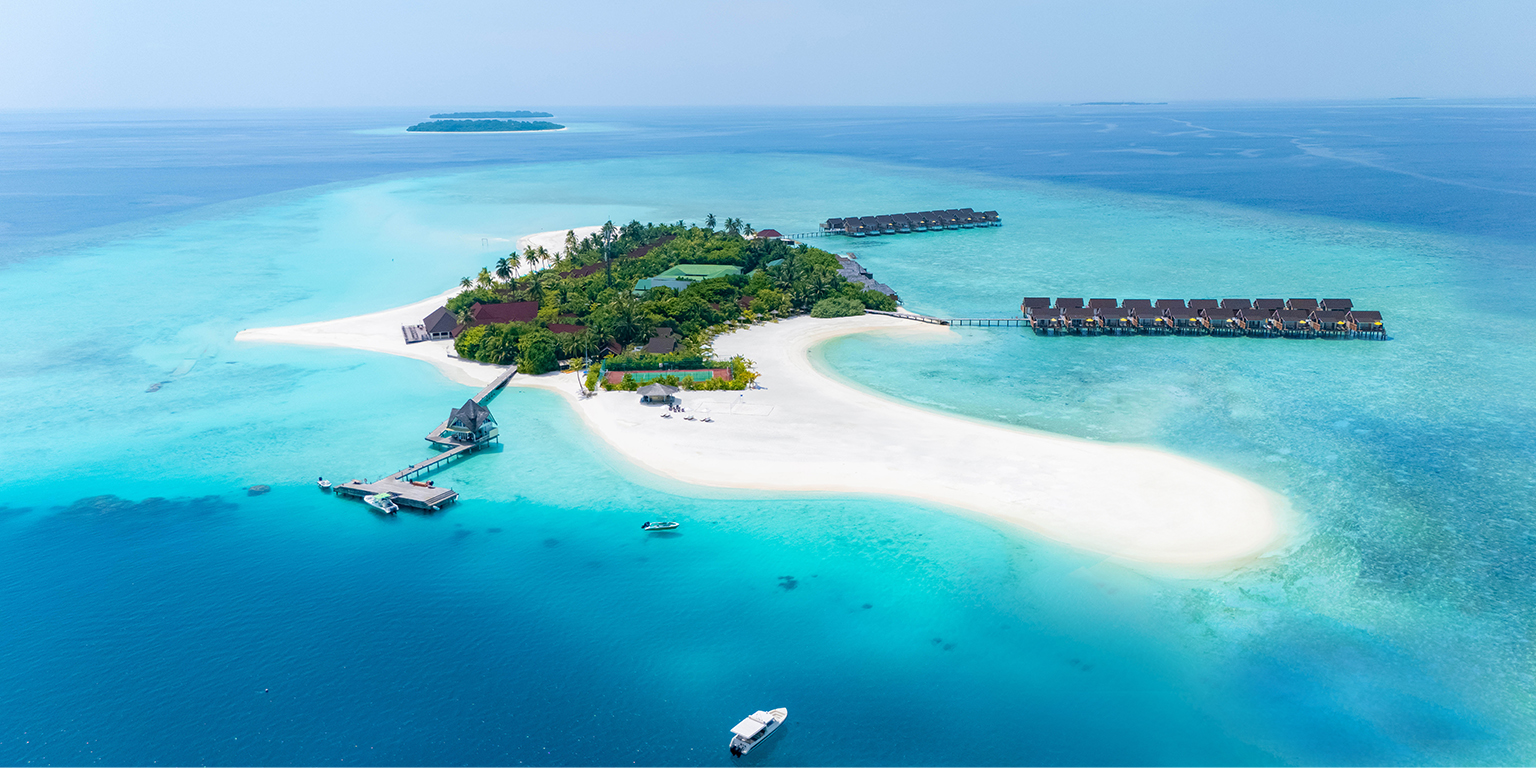
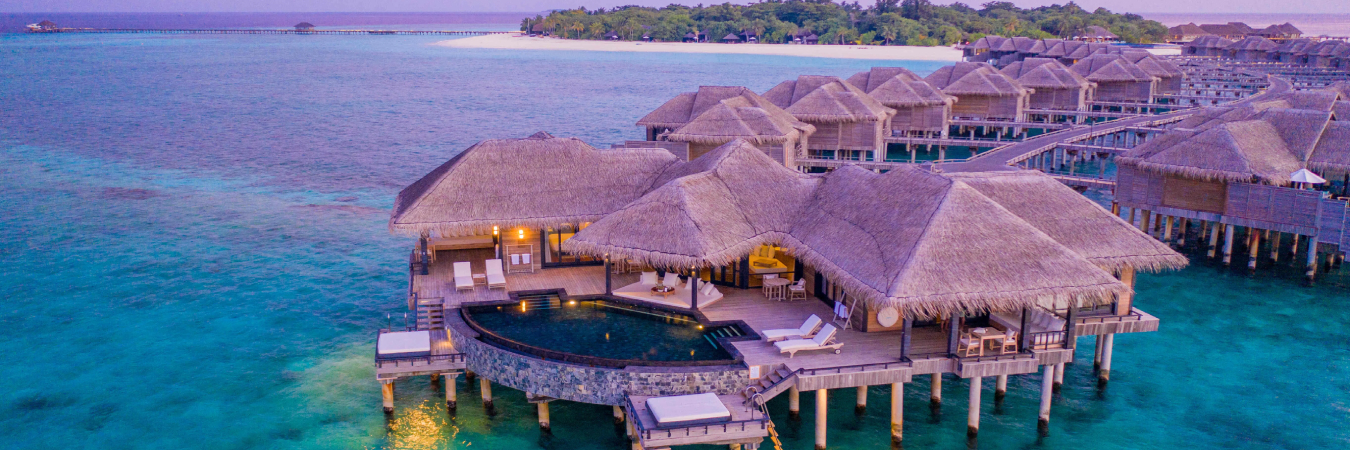
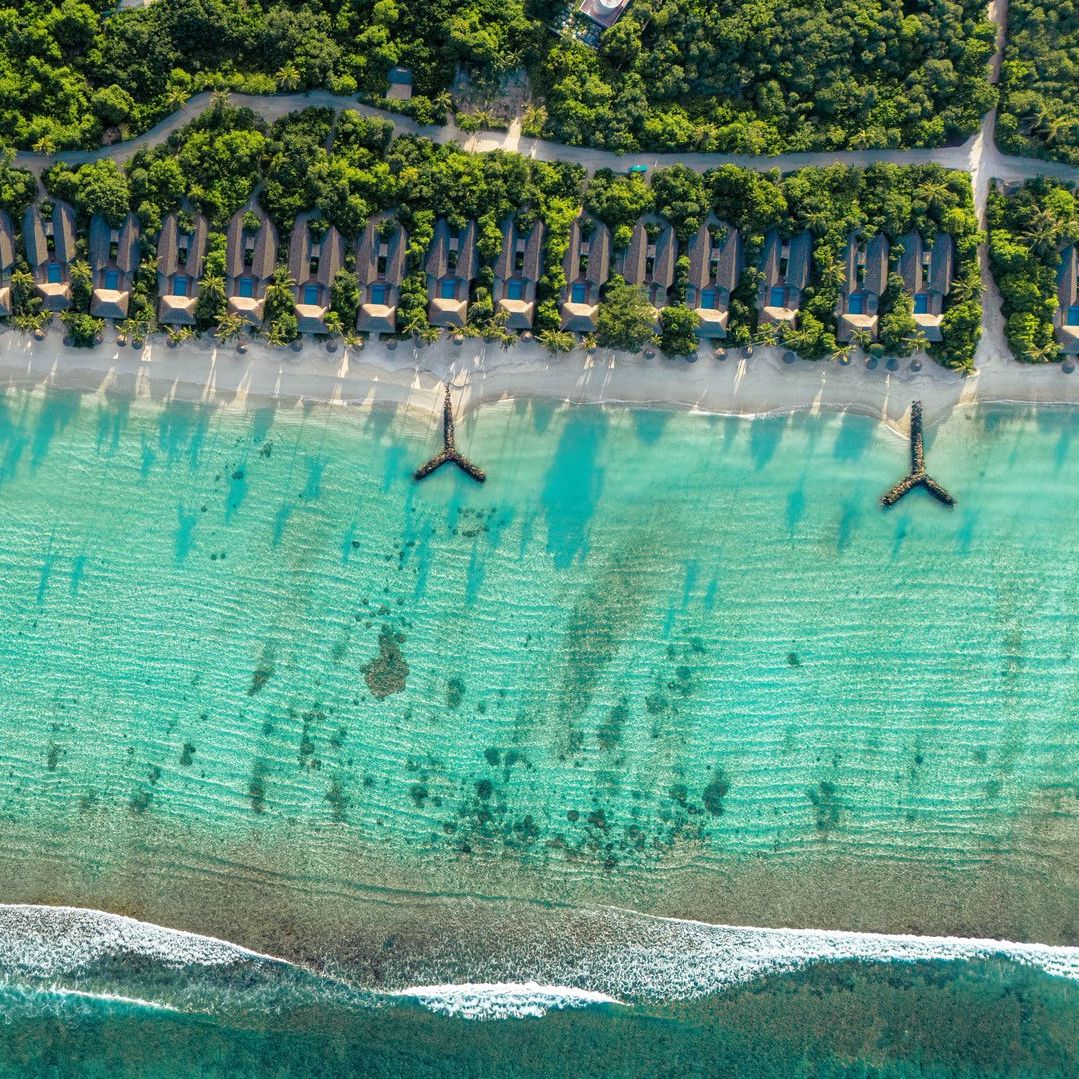
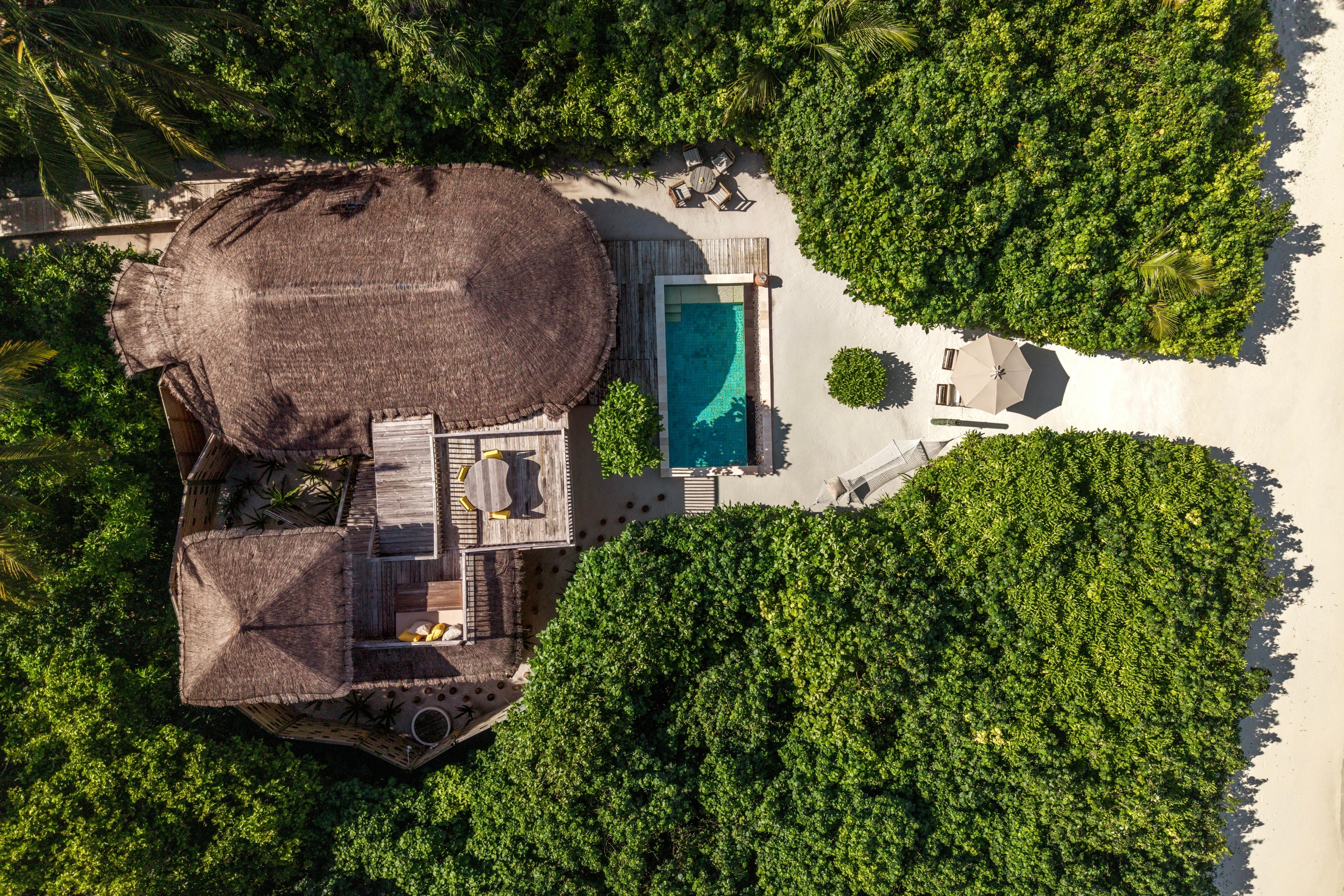
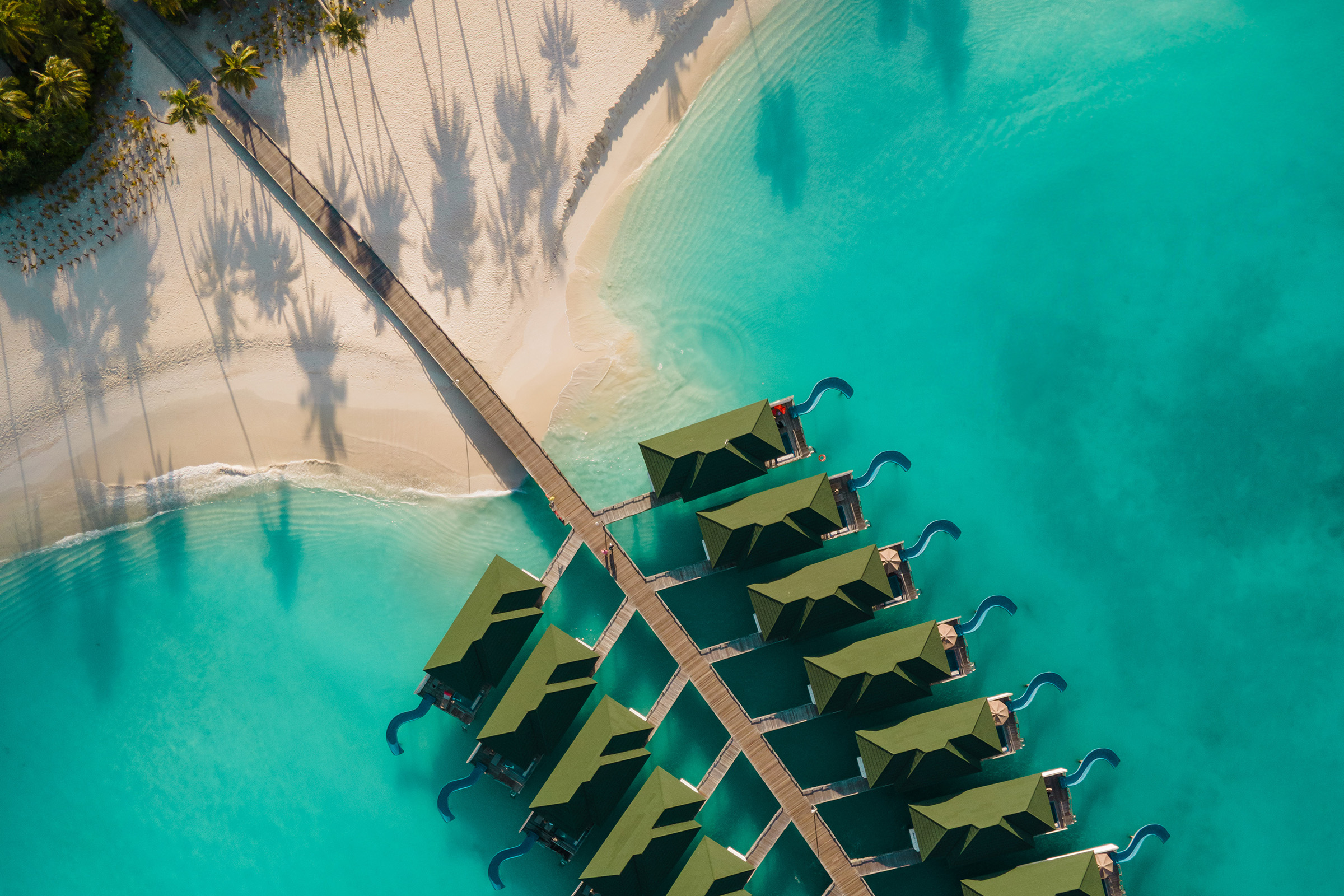
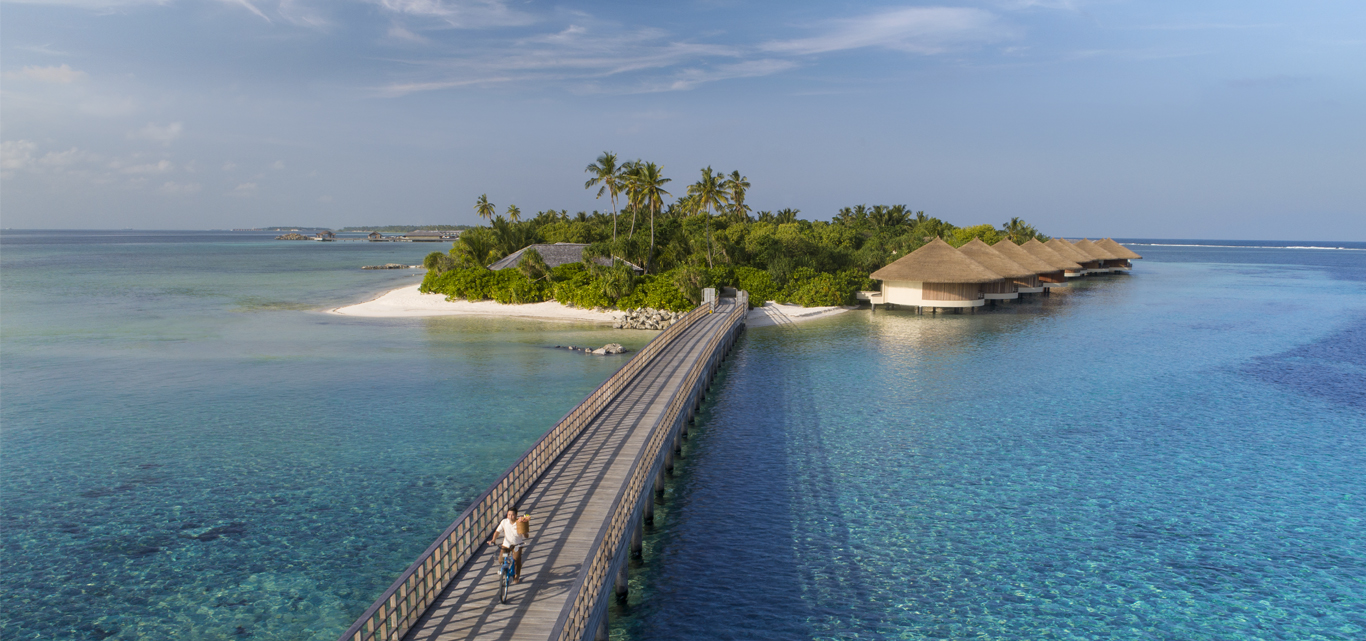
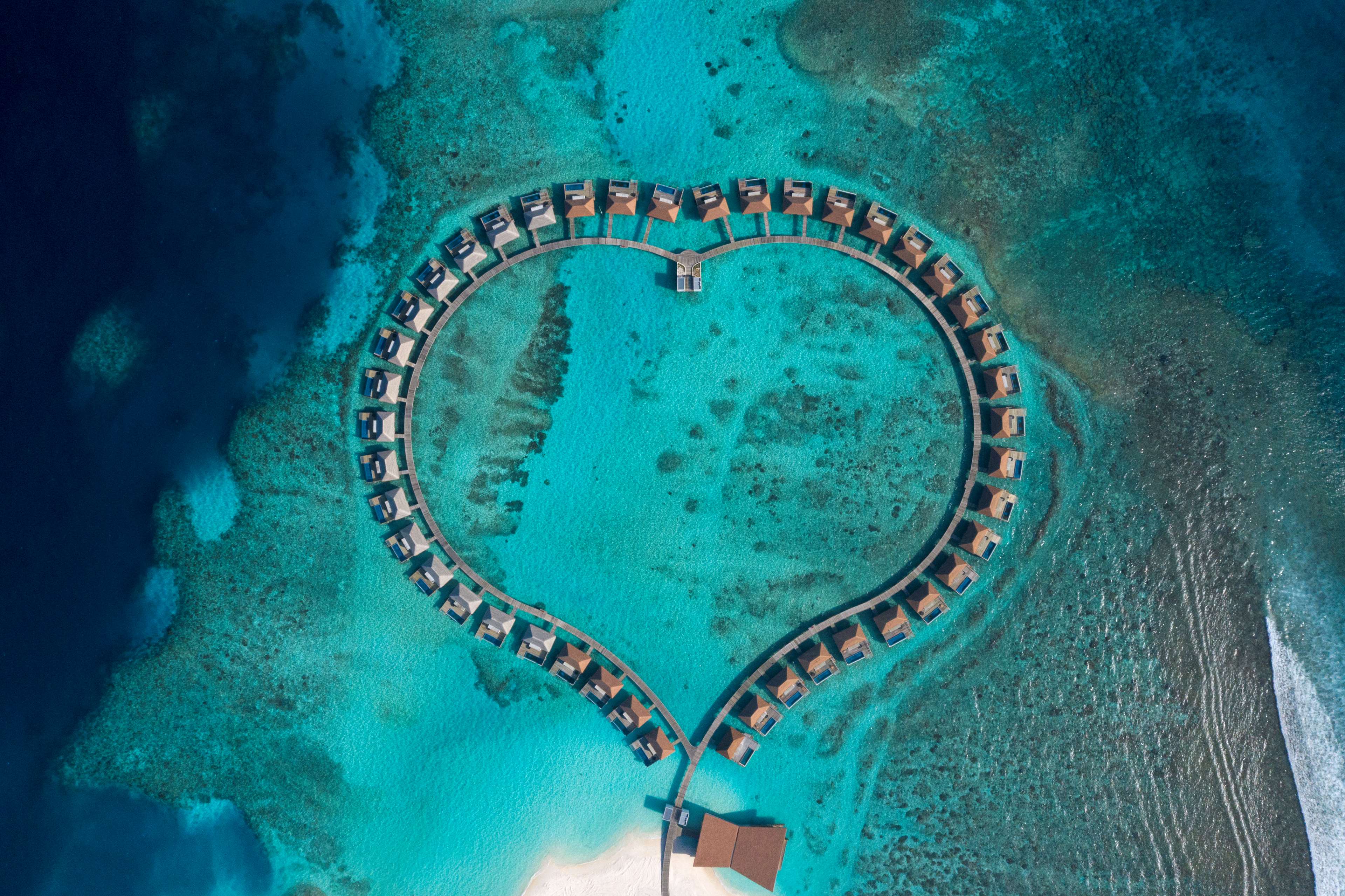
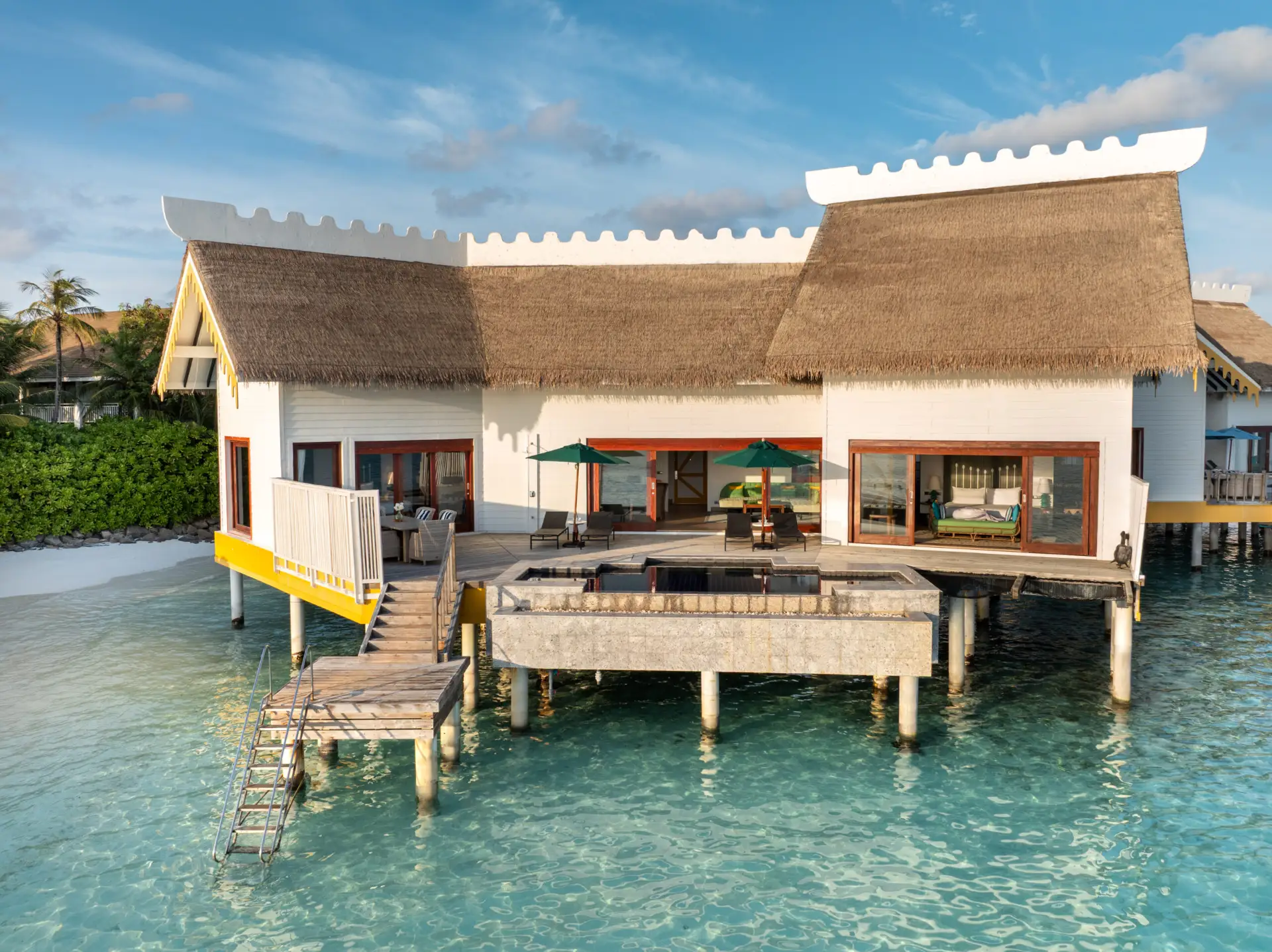
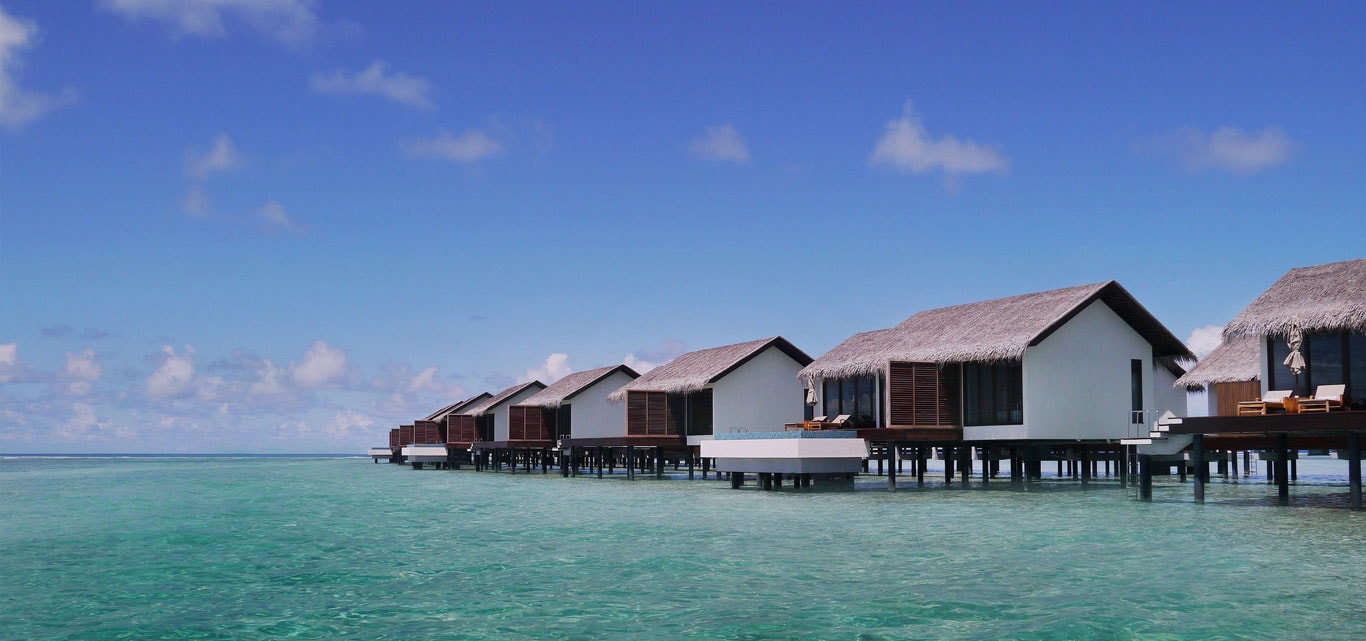
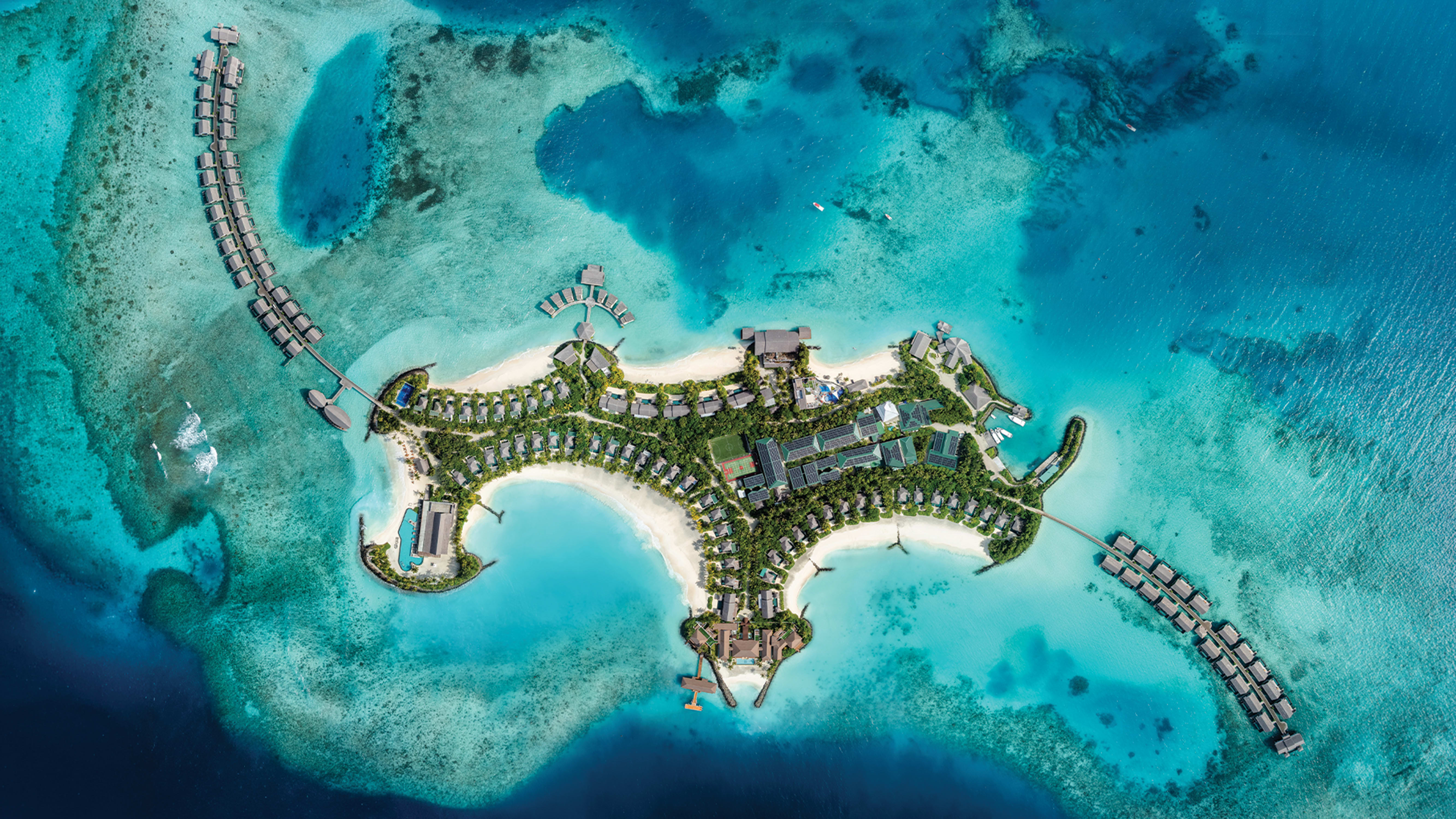
The Maldives is 1,190 coral islands scattered across 870 kilometres of the Indian Ocean, where the idea is simple: one island, one resort, and the reef starts a few steps from your door. You choose a property and an atoll rather than an itinerary - a water villa over a turquoise lagoon in South Male, forty-five minutes by speedboat from the airport, or a seaplane flight over ring after ring of coral to Baa Atoll, where manta rays gather at Hanifaru Bay between June and November. Days are snorkelling the house reef, a sandbank picnic, a dolphin cruise at sunset, and very little else, which is the point. Flights from South India take under two hours, the visa is free on arrival, and vegetarian and Jain food are properly understood here.

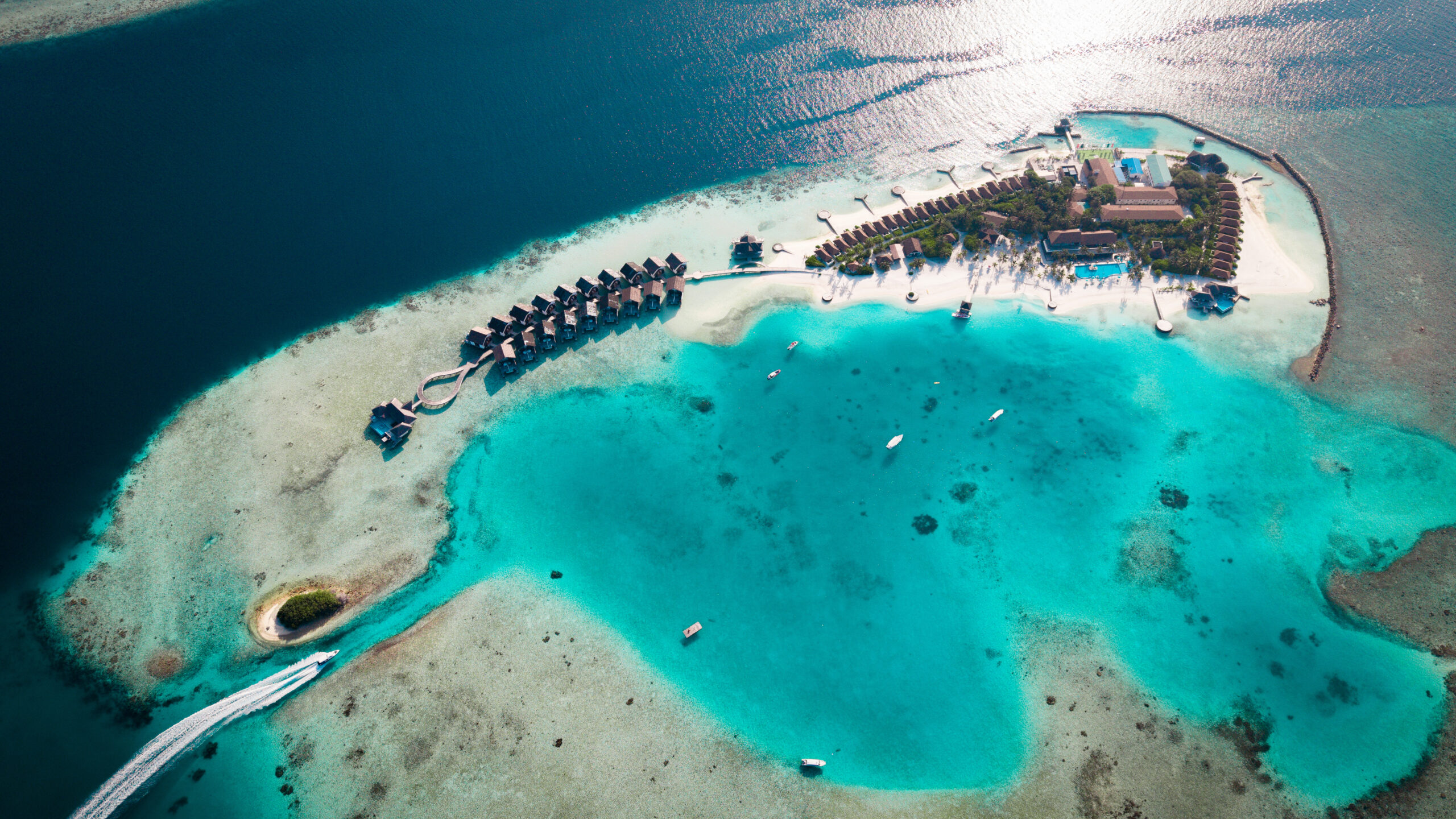
The Maldives is a nation of about 1,190 coral islands grouped into 26 natural atolls, strung along 870 kilometres of the Indian Ocean south-west of Sri Lanka. Nothing on it rises more than about 2.4 metres above sea level. Roughly 190 islands are inhabited, around 180 are resorts, and the defining idea - one island, one resort - means that when a client books, they are buying a specific piece of land with a specific reef around it. Male, the capital, is one of the densest cities on earth, packed onto two square kilometres, and most visitors see it only from the window of a speedboat.

For Indian travellers this is the closest genuine luxury beach destination there is - under two hours from Kochi or Bengaluru, three and a half from Delhi - with a free visa on arrival and no application to make. Indians are now among the largest source markets, which means resort kitchens understand vegetarian and Jain requirements properly, Indian restaurants and Indian chefs are common, and staff are used to Indian family travel. The things to be honest about: it is expensive once you add transfers, green tax and the 10% service charge; it is one island with no sightseeing; and alcohol exists only inside licensed resorts, not on local islands.

Quick facts
EntryFree visa on arrival, 30 days (Indian nationals recorded as entitled to 90) · up to 30 days
Best monthsDecember, January, February, March, April
CurrencyMaldivian Rufiyaa (MVR); USD used daily
Time zoneUTC+5, no DST (IST -0:30)
Main gatewayMLE
Typical trip5-6 nights
Good forcouples, honeymoon, families with young kids, families with older children, seniors, first-timers
A short history

The islands were settled from South India and Sri Lanka well over two thousand years ago and were Buddhist for much of the first millennium. In 1153 the last Buddhist king converted to Islam - tradition credits a visiting scholar, Abu al-Barakat - and the country has been Muslim since, which is why the constitution still requires citizens to be Muslim and why alcohol and religious idols are restricted. The islands lived on cowrie shells, which were the currency of a trade network running to Bengal and West Africa, and on coir rope, which Arab and Chinese fleets bought. Ibn Battuta served as a judge here in the 1340s and left the best surviving account.

The Portuguese held Male briefly in the 1550s, and from 1887 the Maldives was a British protectorate, becoming independent in 1965 and a republic in 1968. Tourism began in 1972 with two resorts near Male, built by Italian entrepreneurs, and the government's response set the pattern the country still uses: tourists go to their own uninhabited islands, and local islands stay separate. That segregation was relaxed in 2009 when guesthouses on inhabited islands were legalised, which created the budget end of the market. The 2004 Indian Ocean tsunami struck with less force than feared because the atolls absorbed it, but it reshaped several islands. Politics since 2008 has been turbulent, and sea-level rise is the existential national issue.

The lie of the land

The Maldives is the flattest and most dispersed country on earth: 1,190 islands across 90,000 square kilometres of ocean, of which less than 300 square kilometres is land. Each atoll is a ring of coral reef enclosing a lagoon, with sand islands sitting on the rim. Water depth inside a lagoon is typically 2-10 metres and the drop on the outer reef can be hundreds of metres, which is what makes the diving and snorkelling what they are. Nothing is high, nothing is forested beyond palms and scrub, and there is no fresh surface water - resorts desalinate everything.

Distances are measured in transfer time, not kilometres. From Velana International, resorts in North and South Male Atoll are 15-45 minutes by speedboat. Ari Atoll is 25-30 minutes by seaplane, or a 25-minute domestic flight to Maamigili and 10-40 minutes by boat. Baa Atoll, where Hanifaru Bay is, is 30-35 minutes by seaplane or a 30-minute flight to Dharavandhoo. Lhaviyani and Raa are 35-45 minutes by seaplane. The northern Noonu resorts are best reached by a 45-minute domestic flight to Maafaru followed by a short speedboat, which is the routing that removes the daylight restriction. Gan, in Addu Atoll at the far southern end of the country, is a 75-minute domestic flight and is a different holiday entirely - inhabited, connected by causeway roads, and where the diving is least visited.

Plan

When to go

Dry north-east monsoon (December to April), with June to November for mantas and value

December to April is the dry season and the best of the Maldives: calm water, 28-31C, underwater visibility at its peak and very little rain. It is also the most expensive window by a distance, with Christmas and New Year running at two to three times normal rates and needing booking six to nine months ahead, and February and March the sweet spot for weather against price. May to November is the south-west monsoon. Rain comes in short heavy bursts rather than all day, the sea is choppier, and the wind means occasional seaplane and speedboat delays, so build a buffer night before an international departure. In exchange, rates drop 30-50%, resorts that never have availability suddenly do, and the plankton that comes with the wet season brings the manta aggregation to Hanifaru Bay in Baa Atoll from roughly June to November, which is the best marine encounter in the country. June, July and September are genuinely good value. The windows to actively avoid are Indian school holidays in May and October, and Diwali, when Indian demand alone pushes resort rates up 40%.

Season by season

The Maldives is equatorial and the temperature barely moves - 25-31C all year, with sea temperature at 27-30C. The variable is rain, wind and sea state.

Dry north-east monsoon (December-April): 26-31C, low humidity by tropical standards, light winds, calm lagoons and visibility often over 30 metres. Almost no rain in February and March. This is the picture-postcard season and the rates reflect it.

Transition (April-May): the hottest and stillest period, 27-32C, humid, with the first heavy showers building. Water is glassy. Good value in late April before rates fall properly.

South-west monsoon (May-November): 25-30C, humid, with rain arriving as intense bursts, often overnight or in the afternoon, and stronger westerly winds that make the western side of an atoll choppy. Rainfall peaks around June and again in October and November. Visibility drops but plankton rises, which is why manta and whale shark activity is at its best. Rates are 30-50% lower.

Manta and whale shark calendar: Hanifaru Bay in Baa Atoll aggregates mantas roughly June to November, with August and September the strongest. Whale sharks are resident year-round in South Ari Atoll, with sightings better from May to December on the western side.

Explore

Top sights

Marine reserve, Snorkelling

Hanifaru Bay, Baa Atoll

A small bay in the UNESCO Biosphere Reserve where plankton concentrates on an incoming tide and draws hundreds of manta rays, and sometimes whale sharks, into a feeding frenzy in shallow water. Snorkel only, no diving permitted, capped boat numbers and a permit per visitor. Season runs roughly June to November, with August and September strongest. Nothing is guaranteed, and a client must be told this, but on a good day it is the best marine encounter in the Indian Ocean.

Snorkelling, Reef

The house reef

The single most important feature of any resort and the thing clients most often fail to check before booking. A good house reef means walking off the beach or down the villa steps into a coral drop-off with reef fish, turtles and small sharks within twenty metres. A bad one means a long shallow lagoon and a boat trip to see anything. Vilamendhoo, Kuredu, Fihalhohi, Reethi Beach and Bandos have genuinely strong house reefs; several famous luxury names do not. Ask before you book.

Wildlife, Snorkelling

South Ari Atoll whale sharks

The southern rim of Ari Atoll holds the only year-round resident whale shark aggregation in the Maldives, protected as a marine area since 2009. Excursions run from Maamigili, Dhigurah and the South Ari resorts, typically a half day at USD 80-150. Sightings are good but not certain, and the boats can be crowded. Rules are strict: stay 4 metres clear, no touching, no flash, and no swimming into the animal's path. Choose an operator who enforces them.

Experience, Beach

A sandbank picnic

A bare crescent of white sand in the middle of the lagoon, exposed at low tide and gone at high, reached by dhoni or speedboat with a picnic and an umbrella. It is the photograph every client has in their head and, unusually, it lives up to it. Resorts charge USD 150-350 for a couple. Go in the morning for the light and the tide, take reef shoes, and be clear there is no shade beyond what the crew brings.

City, Culture

Male city

One of the most densely populated cities in the world, packed onto two square kilometres, and the only place in the country to see Maldivian life at scale. The Hukuru Miskiy, a coral-stone mosque of 1658 with carved interiors, the gold-domed Grand Friday Mosque, the fish market at the waterfront in the late afternoon and the National Museum are all within a kilometre. A half day is ample, and it works best as a filler between a resort checkout and an evening flight.

Diving

Maaya Thila and the Ari Atoll dive sites

Maaya Thila is a submerged pinnacle rising to 6 metres, protected since 1995, best known for night dives where white-tip reef sharks hunt in torchlight. Around it sit Fish Head, with grey reef sharks, and Broken Rock with its canyon. Ari Atoll is the strongest all-round diving in the country and a two-tank day runs USD 150-220. Sites require reasonable current tolerance, so they suit certified divers rather than first-timers.

Culture, Island

Local island life at Dhigurah or Fulidhoo

Inhabited islands where guesthouses and day visits are permitted and where a client can see what the Maldives actually is beyond the resort - a village, a school, a mosque, a harbour of dhonis, and a designated bikini beach. Dhigurah, at 3 km long in South Ari, has a long sandbank and whale shark access; Fulidhoo in Vaavu is quieter and known for its bodu beru drumming. Dress modestly off the bikini beach; there is no alcohol.

Experience, Transfer

The seaplane flight itself

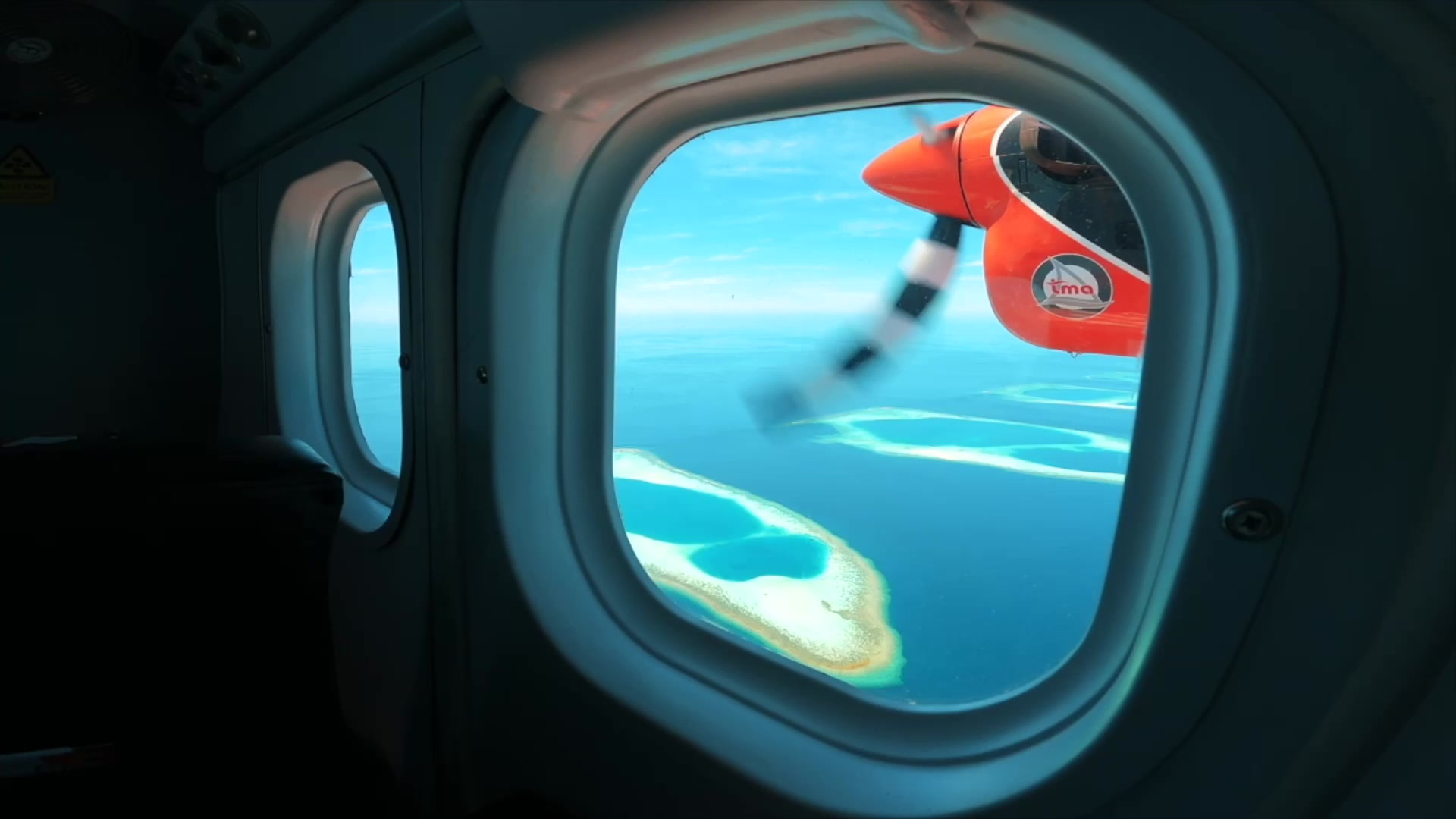
Worth listing as an attraction because it is one, and because it costs USD 400-750 per person return. A Twin Otter on floats flying at 300 metres over atoll after atoll of turquoise rings and sandbanks for half an hour, with the doors open on the ground and pilots often flying barefoot. Take the window seat behind the wing, keep the camera out, and accept that the schedule will move - it is daylight-only and weather-dependent, and departure is confirmed the night before.

Explore

Off the beaten path

Thulhaadhoo, Baa Atoll

A small inhabited island that is the last real centre of Maldivian liyelaa jehun lacquerware, where craftsmen turn and lacquer boxes and vases on hand-powered lathes using techniques that go back centuries. Several workshops welcome visitors and sell directly at a fraction of resort boutique prices. Reachable on a half-day boat trip from most Baa Atoll resorts. Almost nobody goes, and it is the only genuine craft souvenir in the country.

Addu Atoll and Gan

The far southern atoll, a 75-minute domestic flight from Male, and a completely different Maldives - six islands linked by causeways and a 14 km road, a former RAF base with wartime relics, the country's only equatorial channel diving, and the British Loyalty wreck. Cycling between islands is the way to see it. Very few Indian clients are sold this and it suits a second-visit traveller or a diver who wants uncrowded sites and lower prices.

Utheemu Ganduvaru, Haa Alif

The 16th-century coral-and-timber palace in the far north where Mohamed Thakurufaanu, the national hero who drove out the Portuguese in 1573, was born. Small, beautifully carved, with swing beds and lacquered panels, and the closest thing the Maldives has to a heritage monument outside Male. It requires a domestic flight to Hanimaadhoo and a boat, so it only makes sense for a client already staying in the northern atolls.

Fuvahmulah, a one-island atoll

A single large island forming its own atoll near the equator, with two freshwater lakes, a black pebble beach and farmland, none of which exists anywhere else in the country. It has become a serious destination for tiger shark diving, which is done year-round at the harbour mouth with experienced guides only and is not for casual divers. A 90-minute domestic flight from Male, a handful of guesthouses, and no resorts at all.

Explore

Where to stay

South Male Atoll

Fifteen to forty-five minutes by speedboat from Velana, which is the whole reason to choose it - the transfer runs at any hour, so a late arrival from Delhi or Mumbai is not a problem. Good house reefs, strong mid-range and upper-mid inventory including Anantara Dhigu and Veli, Adaaran Prestige Vadoo and Cocoon, and some excellent surf breaks. Less dramatic than the outer atolls but by far the most practical.

Best for: First-timers, short stays of four nights or less, late-arriving flights, families
Stay: 4-5 nights

North Male Atoll

The oldest resort area in the country, 20-50 minutes by speedboat, with the Manta Point and Lankan Beyru dive sites and a spread that runs from Bandos and Kurumba at the accessible end to One&Only Reethi Rah and Waldorf Astoria Ithaafushi at the top. Busier water than the outer atolls, with more boat traffic, but the convenience and the range of price points are unmatched.

Best for: Divers, luxury clients who want a short transfer, first-timers
Stay: 4-6 nights

Ari Atoll (Alif Alif and Alif Dhaal)

The big central atoll, 25-30 minutes by seaplane or a 25-minute domestic flight to Maamigili plus a boat. The best all-round diving in the country - Maaya Thila, Fish Head, Broken Rock - and resident whale sharks along the southern rim, which is the only place in the Maldives where they are reliably found year-round. Constance Moofushi, LUX South Ari, Vilamendhoo and Kuramathi sit here across price bands.

Best for: Divers, snorkellers, whale shark trips, honeymoons
Stay: 5-7 nights

Baa Atoll

A UNESCO Biosphere Reserve 30-35 minutes north by seaplane, and the location of Hanifaru Bay, where hundreds of manta rays and sometimes whale sharks aggregate to feed between roughly June and November. Snorkel-only and permit-controlled. Resorts range from Reethi Beach and Dhigufaru in the mid-range to Soneva Fushi, Milaidhoo and Four Seasons Landaa Giraavaru at the top. The right choice for a wet-season trip.

Best for: Manta season, marine-life-led clients, luxury honeymoons
Stay: 5-7 nights

Maafushi and the guesthouse islands

Inhabited local islands where guesthouses were legalised in 2009, creating a budget Maldives at USD 60-120 a night against USD 400 at a resort. Maafushi is 30 minutes by speedboat from Male and has a designated bikini beach, dive shops and day trips to nearby resorts. The trade-offs are real and must be stated: no alcohol on the island, modest dress off the bikini beach, simple rooms, and a working village rather than a private island.

Best for: Budget travellers, solo travellers, divers, clients who want to see actual Maldivian life
Stay: 3-4 nights
Explore

Things to do

Adventure
  • Diving is the headline: Maaya Thila and Fish Head in Ari Atoll for grey reef sharks, Manta Point and Lankan Beyru in North Male for manta cleaning stations, Fotteyo Kandu in Vaavu for one of the best channel dives in the world, and the Maldives Victory wreck near the airport.
  • A two-tank dive runs USD 150-220, an open-water course USD 650-900, and most resorts have an on-island PADI or SSI centre.
  • Snorkelling the house reef is free and, at a resort chosen for it, is the whole holiday.
  • Hanifaru Bay in Baa Atoll is snorkel-only, permit-controlled and seasonal.
  • Whale shark snorkelling from South Ari runs year-round.
  • Beyond the water: a sunset dolphin cruise on a dhoni, night fishing with hand lines, sandbank picnics and private island drop-offs, surfing at Thulusdhoo's Cokes and Chickens breaks and at Pasta Point from March to October, kitesurfing and windsurfing in the monsoon winds, submarine dives from Male, parasailing and seabobs at the larger resorts, and sub-aqua scooter or flyboard sessions for…
Day trips
  • Everything is arranged by the resort and priced per person.
  • The standard set: a sandbank picnic, usually USD 150-300 for a couple with a packed lunch and a boat drop; an uninhabited island visit; a half-day local island trip to the nearest inhabited island for USD 40-80, which is the only real cultural content available and worth pushing; a sunset dolphin cruise at USD 60-120; a sunrise or sunset fishing trip at USD 60-100, where the catch is grilled for…
  • From the Male end, a half-day Male city tour covering the Grand Friday Mosque, the fish market and the National Museum costs USD 50-90 and suits a client with a long departure gap.
  • From Maafushi and the guesthouse islands, day trips to a nearby resort for day-use access to a bar and a pool run USD 60-120 and are how budget clients get the resort experience.
  • Hanifaru Bay excursions from Baa Atoll resorts are USD 100-200 with a permit fee included.
After dark
  • There is effectively none, and clients need to be told this before they book.
  • The Maldives is an Islamic country where alcohol is illegal outside licensed resort premises, so there are no bars, clubs or licensed restaurants on Male or on any inhabited local island.
  • On a resort island, the evening is a sunset bar, dinner, perhaps a live band or a DJ two nights a week, a beach movie, and bed by eleven.
  • Larger resorts such as Kuramathi, Sun Island and Meeru run more of a programme, including crab racing, cultural bodu beru drumming shows and themed buffet nights, and a handful of luxury properties have a proper cocktail programme.
  • Drinks are expensive: a beer USD 9-14, a cocktail USD 16-25, a mid-range bottle of wine USD 60-100.
  • Clients staying on Maafushi or Thulusdhoo should be told plainly that there is no alcohol on the island at all, except on a floating bar moored offshore.
Shopping
  • Very limited and not a reason to come.
  • Resort boutiques sell resortwear, sunscreen and souvenirs at three to four times mainland prices.
  • In Male, the Majeedhee Magu shopping street and the local market near the waterfront sell dried tuna, coconut products, and handicrafts, and the Male Fish Market is worth seeing even if nothing is bought.
  • What is actually worth buying: lacquerware boxes from Thulhaadhoo in Baa Atoll, which is a genuine local craft; woven coir and reed mats known as thundu kunaa from Gaafu Dhaalu; dried and smoked tuna, called hikimas, which is the national food product; and Maldivian-made coconut oil and skincare.
  • Do not buy coral, turtle shell, shark products or sand under any circumstances - all are illegal to export and are screened for at departure.
  • Bargaining is not done in Male shops; it is not that kind of market.
Explore

Festivals & events

  • Ninth month of the Islamic calendar, moving about 11 days earlier each year
    Ramadan

    Resorts operate normally and a guest on a resort island will barely notice it, but inhabited islands change completely: cafes and shops do not serve food or drink in daylight, working hours shorten, and the evening comes alive after iftar. Clients staying in guesthouses on Maafushi or Thulusdhoo should be briefed honestly, and told not to eat, drink or smoke in public during the day. Local island day trips are less rewarding in this month. Resort staffing is unaffected.

  • End of Ramadan
    Eid al-Fitr

    The biggest holiday in the Maldivian calendar, marked with public prayers, bodu beru drumming, communal meals and island games. Some resorts stage a cultural evening for guests. Operationally it means local islands are festive rather than closed, domestic flights fill as Maldivians travel home, and government offices shut for several days. Pleasant to land on, with almost no impact on a resort stay.

  • 26 July
    Independence Day

    Marks independence from Britain in 1965, with parades in Male, a military band display and public celebrations. Relevant only to a client spending time in the capital, and a good day to be there if they are. Resorts are unaffected. It falls in the wet season, so it usually coincides with lower rates.

  • Tenth day of Dhul Hijjah, moving each year
    Eid al-Adha

    The second Eid, with public holidays running several days and a strong tradition of families travelling between islands. The operational effect is on domestic aviation - Maldivian and Manta Air domestic flights fill and the seaplane fleet is at full load, so transfers can run late. If a client is transiting to an outer atoll over these dates, build an extra hour of slack into the connection.

  • First day of Rabi al-Awwal, moving each year
    National Day (Qaumee Dhuvas)

    Commemorates Mohamed Thakurufaanu's expulsion of the Portuguese in 1573, with parades and flag ceremonies in Male and on the larger inhabited islands. Low impact on a resort stay. Worth knowing about only for a client spending a day in the capital, where the Grand Friday Mosque and the National Museum are the focus.

Explore

Maldives in pictures

Maldives photo 1
On the ground

Food & drink

Mas huni

The national breakfast - shredded smoked tuna pounded with grated coconut, finely chopped onion, chilli and lime, eaten with roshi flatbread and sweet black tea. Salty, hot and genuinely good, and served at almost every resort buffet as the local option. Not vegetarian, and there is rarely a vegetarian version, though the coconut and onion base on its own is sometimes offered on request.

Garudhiya

A clear tuna broth simmered with nothing but fish, salt, curry leaf and a little chilli, served over rice with lime, onion and a chilli on the side to crush in. Deceptively simple and the dish Maldivians actually eat at home most often. Ask for it at a guesthouse or a local cafe rather than a resort buffet, where it is rarely made properly.

Mas riha and kukulhu riha

The Maldivian curries - tuna in a coconut milk gravy with curry leaf, pandan, cardamom and chilli, or the chicken version. Closer to a South Indian or Sri Lankan curry than to anything North Indian, and Indian clients usually take to it immediately. A vegetable riha with breadfruit or pumpkin is made on some islands and is the best local vegetarian option in the country.

Hedhikaa (short eats)

The afternoon tea spread of fried snacks that every local cafe puts out around 4pm - gulha, small dough balls of smoked tuna and coconut; bajiya, a fish samosa; keemia, fish rolls; and masroshi, a stuffed flatbread. Most contain tuna. The sweet ones, such as bondibai coconut rice pudding and foni boakibaa, are vegetarian and are the safe pick for a vegetarian client.

Fihunu mas

Whole reef fish or tuna scored, rubbed with a chilli and lime paste and grilled over coconut husk, usually served on the beach at a resort barbecue night or fresh off a fishing trip. The single best thing eaten in the Maldives and the reason to take the night-fishing excursion, because the resort will cook what the client catches.

Saagu bondibai and raa

Sago pudding cooked in coconut milk with rosewater and cardamom, served at celebrations and on most resort dessert buffets, and entirely vegetarian. Raa is the fresh, lightly sweet unfermented palm toddy tapped from coconut palms and drunk in the morning on local islands - non-alcoholic when fresh, which is the point, and worth trying on a local island visit.

Vegetarian, Jain & dietary

Genuinely easy, and much easier than most beach destinations, because Indians are now among the largest source markets and resorts have adjusted. Almost every resort of any size has Indian dishes on the buffet daily, many employ Indian or Sri Lankan chefs, and a clear vegetarian section is standard. Tell the resort at the time of booking, not on arrival: give the exact requirement - pure vegetarian, no onion and no garlic for Jain, no egg, halal - and get it acknowledged in writing on the booking. Jain meals are routinely handled at the larger Indian-facing resorts (Kuramathi, Sun Siyam, Adaaran, Anantara, Centara) with notice, and a Jain client should be steered to one of those rather than to a small boutique property with a 20-cover kitchen. Halal is close to universal: the Maldives is a Muslim country, pork is prohibited nationally and only served in a handful of resorts under a specific licence with clear labelling. Local Maldivian food is heavily tuna-based, so the "local" option on a buffet is rarely vegetarian. Two honest warnings: fish stock appears in soups and sauces by default, and a small luxury resort with a single tasting-menu restaurant is the hardest place in the country to be a strict vegetarian.

Where & when to eat

Almost all eating happens inside the resort, which is why the meal plan is a pricing decision rather than a food decision. Half board typically covers breakfast and dinner at the main buffet restaurant and adds USD 60-110 per person per night to a room-only rate. Full board adds USD 100-160. All-inclusive, which most Indian clients prefer once they see the drinks list, adds USD 140-250 per person per night and is usually the right recommendation because à la carte pricing on an island is brutal - a club sandwich USD 25, a main course USD 40-70, a bottle of water USD 6. Speciality restaurants at mid-range resorts run USD 80-150 a head and at luxury properties USD 150-400; a single over-water dinner should be budgeted rather than discovered. Benchmarks worth naming: Ithaa at Conrad Rangali, the underwater restaurant, at roughly USD 350 a head; Soneva Fushi's Out of the Blue; and Anantara Dhigu's Sea.Fire.Salt.Sky. On local islands, a guesthouse meal or a cafe on Maafushi is USD 8-20 a head and is far better value. Breakfast 7-10am, lunch 12.30-2.30pm, dinner 7.30-10pm, and kitchens close early.

Food & water safety

Food safety at resorts is high - kitchens are audited and buffets are properly temperature-controlled. Tap water is desalinated and is technically safe at most resorts, but taste and mineral content vary, so resorts supply filtered still and sparkling water in glass bottles, and many now charge for it or include it only in all-inclusive plans. On local islands and in Male, drink bottled water only. Ice at resorts is made from treated water and is fine. Raw fish, including the widely served tuna sashimi and the local mas huni, is high quality but should be avoided by anyone with a sensitive stomach. The real health issue is not food but heat and sun: the equatorial sun at 4 degrees north burns in twenty minutes, dehydration is common, and the combination of alcohol, sun and swimming causes most resort medical incidents. Reef cuts get infected fast in warm water - clean and cover them immediately. Carry rehydration salts and a high-factor reef-safe sunscreen.

Tipping

A 10% service charge is legally applied to nearly everything on a resort island and is distributed to staff, so tipping is genuinely optional on top. Where clients do want to tip: USD 5-10 a day left for the villa host or butler at the end of the stay, USD 10-20 for a dive instructor after a course, USD 5-10 for a boat crew after an excursion, and USD 10-20 for the butler at a luxury property. Tip in US dollars in cash, in an envelope at the end, rather than per service - it is the resort convention and staff prefer it. Most resorts operate a staff tip box at reception, which is the fairest option because it includes kitchen and housekeeping staff the guest never sees. Everything else is charged to the villa and settled by card at checkout. Do not tip on a local island guesthouse in the same way; USD 3-5 for a boat crew is appropriate there.

On the ground

Getting there & around

Flying in

Velana International (MLE) sits on its own island, Hulhule, next to Male and connected to Hulhumale by a bridge. Nonstops from India: IndiGo from Delhi, Mumbai, Bengaluru, Chennai, Kochi and Hyderabad; Air India from Delhi and Mumbai; Air India Express from Kochi, Bengaluru and Thiruvananthapuram; SpiceJet on selected routes. Flying time 1h20m from Thiruvananthapuram, 1h45m from Bengaluru and Chennai, 2h40m from Mumbai, 3h30m from Delhi. Arrivals is small and the process is quick, but resort transfer desks are in a separate hall and the seaplane terminal is a shuttle bus ride away. Gan (GAN) in Addu Atoll handles limited international traffic and serves the far south; Maafaru (NMF) is the domestic gateway for the northern Noonu resorts and takes some private jet traffic. The arrival time matters more than the fare - see transfers.

Airport transfers

This is the single most important planning decision in a Maldives booking and it must be settled before a resort is confirmed.

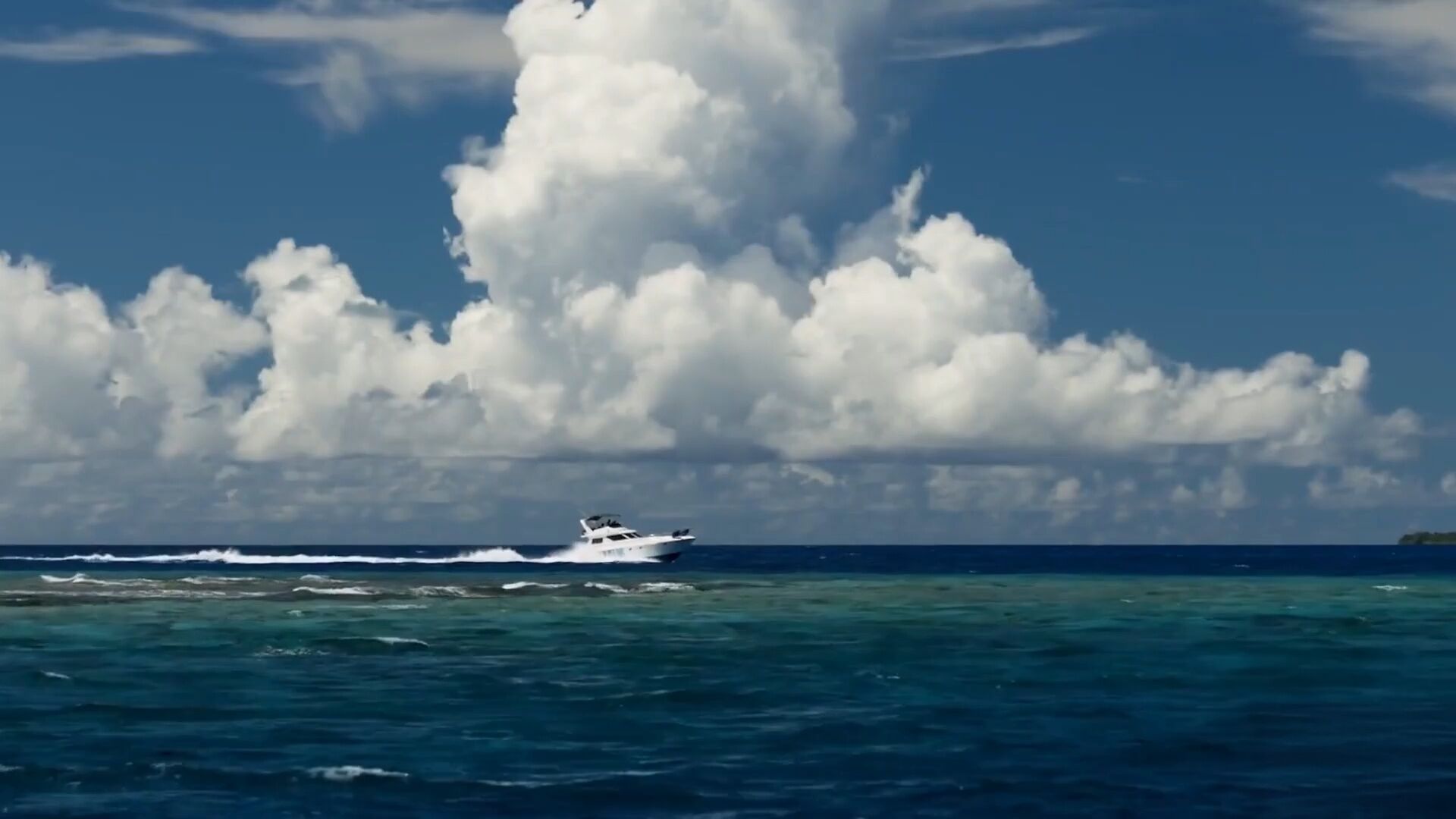
Speedboat: 15-45 minutes, USD 100-250 per person return for a shared boat, more for a private one. Operates around the clock, so it is the only transfer type that is safe for a late-night arrival from India. This is why South and North Male Atoll resorts suit clients on evening flights.

Seaplane: operated by Trans Maldivian Airways and Manta Air from a terminal reached by shuttle bus from the main arrivals hall. Twenty-five to forty-five minutes, USD 400-750 per person return. The flight itself is spectacular and is part of the holiday. The constraint is absolute: seaplanes fly in daylight only, roughly 06:00 to 15:30, and the departure time is confirmed only the evening before and shifts with weather and load. If the flight from India lands after about 15:00, the client overnights in Male or Hulhumale at their own cost. Waits of one to three hours at the seaplane terminal are normal and are not a service failure. Baggage is limited to about 20kg plus 5kg hand baggage, with excess charged.

Domestic flight plus speedboat: a Maldivian or Manta Air turboprop to Maamigili, Dharavandhoo, Kooddoo, Maafaru or Gan, then 10-40 minutes by resort speedboat. USD 350-600 per person return. This is the routing that lets a client on a late arrival reach a far atoll, because domestic flights operate into the evening, and it is the right answer for the northern Noonu resorts.

Male city: if a night in the capital is needed, Hulhumale hotels are 10 minutes from the airport by taxi at MVR 100-150 and are far more practical than crossing to Male itself.

Ride-hailing

There is no meaningful ride-hailing relevant to a resort stay, because there are no roads. In Male and Hulhumale, the Ava and Ride Maldives apps work and taxis are a flat MVR 25-40 (INR 95-150) for any trip within the city, with a small surcharge for airport runs. On larger local islands such as Maafushi there are no cars worth speaking of - everything is a five-minute walk. Inside a resort, movement is on foot or by buggy, and buggies are called by phone from the villa.

Cars & drivers

Not applicable in the usual sense. What replaces a private driver is the private speedboat, which resorts arrange and which costs USD 400-900 for the boat rather than per person - worth doing for a family of four or more on a South or North Male Atoll resort, because it removes the wait for a shared boat to fill. Resorts also charter private seaplanes at USD 3,000-6,000 for the aircraft. A guide, in Maldives terms, is the resort's marine biologist or dive instructor, and the guided house-reef snorkel on day one is the single best-value thing on the activity list at USD 30-60.

Scooters

Not applicable and not available. There is nowhere to ride. On Male and Hulhumale, motorbikes are the dominant local transport and rentals exist, but there is no reason for a visitor to use one - the entire city is walkable and taxis cost under two dollars. On local islands such as Maafushi and Thulusdhoo, the islands are small enough to cross in ten minutes on foot. Do not arrange scooter hire anywhere in the country.

On foot

A resort island is typically 500 metres to 2 kilometres end to end, and a full lap is a 15-40 minute walk on sand - pleasant, and often the only exercise a client takes. Soneva Fushi and One&Only Reethi Rah are large enough that bicycles are provided and genuinely needed. Male is dense and entirely walkable, with the Grand Friday Mosque, the fish market, the old Hukuru Miskiy coral-stone mosque and the National Museum all within a kilometre of the waterfront, and a half day covers it comfortably. Local islands such as Maafushi and Thulusdhoo are crossed on foot in ten minutes. Sand is soft and hot at midday; brief clients that flip-flops are the footwear and shoes are barely needed.

Finding your way

Navigation is not something a client does here - the resort moves you. Google Maps covers Male, Hulhumale and the larger local islands accurately but has little use on a resort island. What is worth having is the airline apps: Trans Maldivian Airways and Manta Air publish seaplane schedule updates, and Maldivian's app covers domestic flights. Download the resort's own app if it has one, because room service, buggy calls, dive bookings and spa appointments usually run through it, and several resorts have moved entirely off paper. Offline downloads matter less than in most destinations because resort wifi is generally good, but data on the seaplane leg is non-existent.

Crossing borders

The Maldives has no land borders - it is an oceanic archipelago and every movement is by boat or aircraft. The nearest countries are Sri Lanka, about 750 km north-east, and India, with Minicoy in Lakshadweep roughly 130 km north of the northernmost atoll but with no passenger link. The practical combinations are by air: Male to Colombo is a 1h20m flight on SriLankan or IndiGo and makes a strong Sri Lanka plus Maldives honeymoon, and Male to Dubai, Singapore or Kuala Lumpur are all well served for a beach-plus-city pairing. Liveaboard dive boats move between atolls within the country and are a distinct product worth quoting for serious divers - typically 7 nights, USD 1,500-3,500 per person, with Male to Male or Male to Gan routings.

On the ground

Money

Currency & exchange

The local currency is the Maldivian Rufiyaa (MVR), pegged in a narrow band around USD 1 to MVR 15.44, but for a resort client it is almost irrelevant - resorts quote, bill and settle in US dollars, and everything is charged to the villa and paid by card at checkout. Do not buy MVR for a resort stay. Indian rupees are not usable at resorts, though a few Male shops and some Indian-facing guesthouses will take them at a poor rate. Carry US dollars in cash for tips, small purchases and local island spending, in small denominations - USD 1, 5, 10 and 20 notes are the useful ones. ATMs at the airport and in Male dispense both MVR and USD, with a fee of around MVR 40-60. There are no ATMs on most resort islands. Do not change money at the airport counters if it can be avoided; the rate is poor and the need is minimal.

Paying

Cards are universal on resort islands - Visa and Mastercard everywhere, Amex at most, with everything charged to the villa and settled once at checkout. A 3-4% card surcharge is occasionally applied; check the resort's policy. Contactless works. Cash is needed for tips, for local island visits, for guesthouse stays, for boat crews and for the Male market, so carry USD 200-400 per couple in small notes for a week. On local islands, guesthouses and cafes increasingly take cards but the smaller ones do not, and mobile signal-based payment systems like BML's app are domestic only. Notify the Indian bank before travel - Maldives transactions from a resort often trigger a fraud hold, which is a miserable thing to sort out from the middle of the ocean. Keep a second card on a different network.

On the ground

Culture & etiquette

Customs

A resort island operates under its own rules and a client will encounter almost no local custom there. Everything changes the moment they step onto an inhabited island. The Maldives is a Muslim country where the constitution requires citizens to be Muslim; alcohol, pork and public displays of affection are not permitted outside resorts, and bringing alcohol or religious idols into the country is an offence. On a local island, dress modestly, do not drink, and do not eat or drink in public during daylight hours in Ramadan. Greet with a handshake between the same sex; many women will not shake hands with a man. Remove shoes before entering a mosque or a home. Do not photograph people, and particularly women, without asking. Friday is the day of congregational prayer and everything on a local island closes from around 11.45am to 2pm. Two sensitivities to brief on: sea-level rise and climate change are not abstractions here and are a serious national subject, and Maldivian domestic politics has been turbulent - it is not a conversation for a visitor to start.

What to wear

On a resort island, anything goes - swimwear is normal all day, and a few resorts have designated nudist or topless areas, though topless sunbathing is technically illegal nationwide and is at the resort's discretion. Evenings at the better resorts are smart casual, meaning a collared shirt and long trousers for men at speciality restaurants; a few properties enforce it. On any inhabited island, including Male, Hulhumale, Maafushi and Thulusdhoo, the rule is firm: shoulders and knees covered for both men and women, no swimwear anywhere except on a designated bikini beach, which the larger guesthouse islands now provide. A woman walking through a local island village in a bikini causes genuine offence and, on some islands, a formal complaint. Mosques require full cover and a headscarf for women, and non-Muslims are often not admitted at all. Pack: light cover-ups, a sarong, a long-sleeved rash guard for snorkelling, which doubles as sun protection, and one smart evening outfit each.

Bargaining

Barely applicable. Resort prices are fixed and non-negotiable, and attempting to haggle over a spa treatment or an excursion reads badly. Where there is room is before the booking, not during the stay: resorts negotiate on inclusions - a free upgrade, a complimentary dinner, a transfer discount, honeymoon extras - through agents rather than directly with guests, which is where our value sits. In Male's Majeedhee Magu shops and the local market, mild bargaining is accepted on souvenirs and handicrafts, expect perhaps 10-20% off an asking price, but it is not a haggling culture and aggressive negotiation is met with a flat refusal rather than a counter-offer. Guesthouse rates on Maafushi and Thulusdhoo are negotiable for longer stays booked directly. What Indian clients get wrong is trying to negotiate at a resort front desk at check-in, which never works and is remembered.

Useful phrases
Assalaamu alaikumHello (the standard greeting)
Kihineh?How are you?
ShukuriyaaThank you
BaraabaruFine / good
AanYes
NoonNo
Ma-aafu kureySorry / excuse me
Adhes kohfaPlease
Kihaa vareh?How much is it?
Agu boduToo expensive
Kobaa...?Where is...?
Molhu / LazzaiyDelicious
Before you go

Entry & documents

Free visa on arrival, 30 days (Indian nationals recorded as entitled to 90) · up to 30 days

Passport

Passport must have a machine-readable zone and at least one month of validity remaining from the date of arrival - the Maldives is unusual in not requiring the standard six months, but most airlines apply their own six-month rule at check-in, so treat six months as the working requirement. No blank-page requirement beyond space for the stamp. Immigration checks a confirmed prepaid booking at a government-registered tourist facility and a confirmed onward or return ticket at the counter, and entry is refused without them. Stays of under 24 hours, including transit, are not permitted. The Maldives has barred Israeli passport holders since 15 April 2025.

Customs

This is where Indian clients most often get caught. Alcohol in any quantity, pork and pork products, and religious idols and images are prohibited in baggage and are confiscated at Velana - duty free bought in India or in transit will be taken, and while alcohol is held for collection on departure at some counters, the practice is inconsistent and it is simpler to tell clients not to buy it. Resorts are the only licensed alcohol venues in the country and their prices reflect it. Also prohibited: pornographic material, narcotics with severe penalties, e-cigarettes and vaping devices, which were banned from import and use in 2024 and are confiscated. Drones require prior permission from the Civil Aviation Authority and most resorts prohibit them outright. Currency above USD 10,000 must be declared. On departure, do not pack coral, shells, sand or turtle products; export is illegal and bags are screened.

Travel insurance

Not mandatory for entry but non-negotiable in practice, and we should decline to book without it. There is no hospital on a resort island - a serious medical event means a speedboat or, worse, a seaplane that cannot fly at night, then treatment at ADK or Tree Top in Male, and anything genuinely serious means an air ambulance to Colombo, Chennai or Singapore at a cost that runs well into lakhs. The policy must cover emergency medical evacuation from a remote island. If the client intends to dive, it must explicitly cover scuba to the planned depth and, critically, hyperbaric chamber treatment - there are recompression chambers at Bandos, Kuramathi and a few other islands, and decompression illness is the most expensive foreseeable claim in the country.

Visa notes

No visa is required before travel and no fee is charged. A free visa is issued on arrival at Velana International to every nationality with a valid passport. The standard grant is 30 days. Indian nationals are recorded as entitled to 90 days under the 1979 bilateral arrangement between India and the Maldives, but in practice officers commonly stamp 30 - tell the client to request the 90-day entitlement explicitly at the counter if they need it, and never build an itinerary that depends on receiving it. Three conditions decide whether the client gets through immigration. First, a confirmed prepaid booking at a government-registered tourist facility is checked at the counter, and travellers planning to find accommodation on arrival are refused entry, so the voucher must be printed. Second, a confirmed onward or return ticket is required. Third, every traveller must submit the free IMUGA Traveller Declaration at imuga.immigration.gov.mv within 96 hours before arrival, and again within 96 hours before departure - it is free, it takes five minutes, and paid third-party sites are not official. The passport needs a machine-readable zone and at least one month of validity, though airlines usually apply a six-month rule at check-in. Stays of under 24 hours including transit are not permitted, and Israeli passport holders have been barred since 15 April 2025. Reconfirm the current position on the Maldives Immigration site before quoting.

Visa rules change. Our desk confirms the current requirements for your passport before you book.

Before you go

Practical essentials

Power

230V, 50Hz, and the socket is Type G - the UK three-pin - with Type D occasionally appearing in older buildings. An Indian round-pin plug will not fit a Type G socket, so a universal adapter is needed, though most resorts keep adapters at reception or fit multi-standard sockets in the villa. Indian chargers and laptop bricks handle 230V without a converter. Resort islands run on generators, increasingly with solar support, and supply is reliable. Bring a power bank for long boat days and a small extension lead, because over-water villas often have sockets only on one side of the bed.

Phone & internet

Resort wifi is generally good to excellent and is almost always included, though a handful of luxury properties still charge or throttle. For a client who wants connectivity on boats and local islands, a local SIM from Dhiraagu or Ooredoo costs USD 15-30 for a tourist package with 15-30GB over 30 days, sold at Velana arrivals with a passport; eSIM is available from both operators and from Airalo and is simpler. 4G and 5G coverage across the inhabited atolls and most resort areas is better than clients expect. There is no signal on the seaplane and coverage can drop on longer boat crossings. Video calling from an over-water villa usually works fine. Do not rely on wifi for anything time-critical on the day of a seaplane transfer.

Opening hours

On a resort island, hours are the resort's own - reception and room service 24 hours, restaurants on a fixed schedule, the dive centre 8am-5pm, and the spa usually 9am-9pm. On Male and the local islands, the working week is Sunday to Thursday; Friday and Saturday are the weekend. Shops open roughly 9am-11pm but close for each of the five daily prayer times for about 15 minutes, which catches visitors out, and close entirely on Friday from about 11.45am to 2pm for congregational prayer. Banks 8am-2pm Sunday to Thursday. Government offices 8am-2pm. The National Museum in Male is closed on Friday. During Ramadan, cafes and restaurants on inhabited islands do not serve in daylight hours and the whole rhythm of local islands shifts to the evening; resorts are unaffected.

Apps worth installing
  • IMUGA (mandatory traveller declaration)
  • Trans Maldivian Airways (seaplane schedules)
  • Manta Air (seaplane and domestic flights)
  • Maldivian (domestic flights)
  • The resort's own app (dining, buggy, spa, excursions)
  • Ava or Ride Maldives (taxis in Male)
  • Google Maps (Male and local islands only)
  • XE Currency (rates)
Before you go

Before you pack

Pack
  • UK-style Type G plug adapter - Indian plugs do not fit
  • Long-sleeved rash guard or swim shirt - the equatorial sun burns in twenty minutes
  • Reef-safe mineral sunscreen, SPF 50, and a second tube; resort prices are three to four times Indian
  • Own snorkel mask - resort rental is USD 15-25 a day and a badly fitting mask ruins the trip
  • Sarong or light cover-up for local island visits, with shoulders and knees covered
  • Water shoes or reef shoes if the resort has a coral-rubble entry rather than sand
  • Wide-brimmed hat, polarised sunglasses and a lip balm with SPF
  • One smart-casual outfit each for speciality restaurant evenings
  • Dry bag for boat trips and phone protection
  • Motion sickness tablets - speedboat crossings in the monsoon are genuinely rough
Documents checklist
  • Passport with a machine-readable zone, and at least six months validity to satisfy airline check-in
  • IMUGA Traveller Declaration submitted free at imuga.immigration.gov.mv within 96 hours before arrival, and again before departure
  • Printed prepaid resort voucher - immigration checks it and refuses entry without it
  • Confirmed return or onward ticket, printed
  • Resort transfer confirmation stating the transfer type, cost and timing, and the seaplane cut-off if applicable
  • Travel insurance covering emergency evacuation from a remote island, plus diving and hyperbaric treatment if diving
  • Dive certification card and logbook if diving
  • Photocopies of passport and tickets kept separately
  • Prescription medicines in original packaging with a doctor's letter
  • Note to client: no alcohol, pork or religious idols in baggage, and no vaping devices
Before you go

Staying safe

Sun, sea and water safety

The most common problems in the Maldives are sunburn, dehydration and reef cuts, not crime. At 4 degrees north the sun burns exposed skin in about twenty minutes, so a long-sleeved rash guard is more useful than sunscreen for a long snorkel. Currents at atoll channels are strong and can be deceptive from the surface - snorkel with a buddy, stay inside the resort's marked area, and take the guided orientation snorkel on day one. Reef cuts infect quickly in warm water; clean and cover them the same day. Most resort medical incidents involve alcohol, sun and swimming in combination. There is no hospital on a resort island - a serious case means a boat, or a seaplane that cannot fly after dark.

Diving safety and evacuation

Standards at PADI and SSI centres are generally high, but the country is remote and decompression illness is the expensive scenario. Recompression chambers exist at Bandos, Kuramathi and a small number of other islands, and reaching one from an outer atoll at night is slow. Never dive on the day of departure - the standard rule is 18 to 24 hours between the last dive and a flight, and that includes the seaplane, which flies at altitude. Insurance must explicitly cover scuba to the planned depth and hyperbaric treatment. Refuse any operator who does not check certification or who puts an uncertified guest on a boat dive.

Law, alcohol and local islands

The Maldives is an Islamic country and its laws apply the moment a client steps off a resort island. Alcohol is illegal outside licensed resort premises - it cannot be brought into the country, carried onto an inhabited island or given to Maldivian staff, and duty free will be confiscated at Velana. Public displays of affection, swimwear off a designated bikini beach and eating in public during Ramadan daylight hours all cause real offence on local islands. Drug penalties are severe. E-cigarettes and vaping devices have been banned from import and use since 2024 and are confiscated at arrival. Do not photograph women or children without permission.

Transfers, weather and delays

The biggest operational risk is the transfer, not safety in the usual sense. Seaplanes fly in daylight only, are confirmed the evening before, and are routinely delayed by weather or load - a two to three hour wait at the seaplane terminal is normal. In the May to November monsoon, speedboat crossings can be genuinely rough and occasionally cancelled. Always build a buffer between the resort transfer and an international departure, and never book a same-day tight connection out of an outer atoll. If the client's flight from India lands after about 15:00 and the resort is seaplane-served, they will overnight in Male at their own cost.

Before you go

Travel responsibly

Environment

The Maldives is the country with the most to lose from climate change and the least ability to prevent it, and that shapes what responsible travel means here. Use mineral, reef-safe sunscreen without oxybenzone or octinoxate; several resorts now provide it and a few refuse chemical sunscreen outright. Do not touch, stand on or kneel on coral, which kills it, and do not chase or touch marine life. Refill rather than buy - most resorts have moved to glass bottles and on-island desalination and bottling, and single-use plastic is being phased out nationally. Choose resorts with a resident marine biologist and a genuine coral restoration programme rather than a page on a website - Six Senses Laamu, Soneva, Reethi Beach and Kuramathi have real ones. Take a shorter shower; every litre is desalinated with diesel. Consider a speedboat resort over a seaplane one where it suits, because the seaplane fleet is the single largest fuel consumer in the tourism sector.

Local communities

Roughly USD 1 in every 3 of Maldivian GDP comes from tourism, but the one-island-one-resort model means very little of a resort stay touches a Maldivian community. The most useful thing a client can do is spend a day on an inhabited island - Maafushi, Dhigurah, Thulusdhoo, Fulidhoo - eating at a local cafe, buying from a local shop and using a local guide, which puts money directly into island households. Book a local island day trip through a community operator rather than only through the resort. What not to do: do not photograph women or children without asking, do not wear swimwear off a designated bikini beach, do not drink or carry alcohol onto an inhabited island, and do not offer alcohol to Maldivian staff, which can cost them their job. Do not hand money or sweets to children. Tip through the staff box so kitchen and housekeeping staff are included, and pay a guesthouse or a local guide their asking price without haggling them down.

Wildlife

Manta rays, whale sharks and turtles are protected and there are clear rules: stay at least 3 metres from a manta and 4 metres from a whale shark, never swim into their path, never touch, and never use flash. Refuse any operator who lets guests ride, grab or chase. Hanifaru Bay is a UNESCO Biosphere Reserve core zone, is snorkel-only, is permit-controlled with a capped number of boats, and diving is prohibited there - any operator offering a dive at Hanifaru is breaking the law. Shark feeding for entertainment is discouraged and we do not book it. Do not buy or collect coral, shells, sand, turtle shell or shark products; export is illegal and enforced at departure screening. Turtle nesting beaches are marked at several resorts - keep off them at night and keep torches and phone lights away from hatchlings, which follow light and will head inland and die. Reef-safe sunscreen is a wildlife issue, not just a sustainability one.

Before you go

Maldives FAQs

Do Indian citizens need a visa for the Maldives?

No. A free visa is issued on arrival at Velana International with no application and no fee. The standard grant is 30 days, and Indian nationals are recorded as entitled to 90 days under a long-standing bilateral arrangement, though officers commonly stamp 30, so ask for 90 at the counter if you need it rather than assuming it. Three things are checked at immigration: a printed prepaid booking at a registered property, a confirmed return ticket, and the free IMUGA Traveller Declaration, which every traveller must submit online within 96 hours before arrival and again before departure.

How many days do I need in the Maldives?

Five to six nights is the right length, and four is the honest minimum. The reason is the transfer: on a seaplane resort, arrival day and departure day are each half consumed by the flight, the terminal wait and the boat, so a three-night trip gives you barely two full days for what you have paid. Five nights on one island lets you settle, dive or snorkel properly, and take a sandbank trip and a local island visit without rushing. Eight to ten nights is worth splitting between two atolls, for example Baa for mantas and South Ari for whale sharks.

When is the best time to visit the Maldives?

December to April is the dry season, with calm seas, the best underwater visibility and the highest prices - Christmas and New Year run at two to three times normal rates and need booking six to nine months ahead. February and March are the sweet spot. May to November is the wet monsoon, when rain comes in short bursts rather than all day and rates drop 30-50%, which makes June, July and September excellent value. That is also when manta rays gather at Hanifaru Bay in Baa Atoll, roughly June to November, so the cheaper season has the better wildlife.

Are there direct flights from India to the Maldives?

Yes, and plenty. IndiGo, Air India, Air India Express and SpiceJet fly nonstop to Male from Delhi, Mumbai, Bengaluru, Chennai, Kochi and Hyderabad. It is a short hop: about 1h20m from Thiruvananthapuram, 1h45m from Bengaluru and Chennai, 2h40m from Mumbai and 3h30m from Delhi. One practical point matters more than the fare. If your resort is reached by seaplane, you must land by around 2pm, because seaplanes only fly in daylight - a later arrival means an unplanned night in Male at your own cost. Book the morning departure.

How much does a Maldives trip cost from India?

A five-night mid-range half-board stay with transfers runs roughly INR 1,10,000 to 1,90,000 per person on twin sharing, with return flights adding INR 18,000 to 45,000. Budget resorts start around USD 200 a night, the honeymoon band sits at USD 400-750, and luxury runs from USD 2,000 upwards. Three costs catch people out and we quote them separately: the transfer, which is USD 100-250 per person by speedboat and USD 400-750 by seaplane; green tax at USD 12 per person per night; and the 16% GST plus 10% service charge on everything.

Is vegetarian and Jain food available in the Maldives?

Yes, and better than in most beach destinations, because Indians are now one of the largest source markets. Most resorts of any size serve Indian dishes daily, many employ Indian or Sri Lankan chefs, and a vegetarian section is standard on the buffet. Tell us the exact requirement at the time of booking - pure vegetarian, Jain with no onion or garlic, no egg - and we get it confirmed in writing with the resort. Jain meals are handled routinely at the larger Indian-facing properties. Local Maldivian food is tuna-based, so the local option on a buffet is rarely vegetarian.

Is the Maldives safe, and is it suitable for families with children?

Very safe - crime against visitors is close to non-existent and a resort island is an enclosed environment. The genuine risks are sun, dehydration, currents in atoll channels and reef cuts, so use a rash guard, take the guided snorkel orientation on day one, and stay inside the resort's marked swimming area. Most resorts have kids' clubs, shallow lagoons and family villas, and several have excellent children's programmes. The things to know: there is no hospital on a resort island, so travel insurance covering evacuation is essential, and a few adults-only resorts do not accept children at all.

Can I bring alcohol, and what should I not pack?

No. Alcohol cannot be brought into the Maldives in any quantity and duty free bought in India or in transit is confiscated at Male. Alcohol is served only inside licensed resorts, where it is expensive - a beer is USD 9-14 and a cocktail USD 16-25 - and it is completely unavailable on inhabited islands like Maafushi. Also prohibited in baggage: pork products, religious idols and images, e-cigarettes and vaping devices, and pornographic material. On the way out, do not pack coral, shells, sand or anything made from turtle shell, all of which are illegal to export and are screened for.

Rather talk it through?

Message our travel desk and describe the trip — a real person picks it up, usually within the hour on Indian working days.

Talk to a travel expertSend your dates, we plan the rest